How to Choose Sheer Curtains for Soft Light and Daytime Privacy
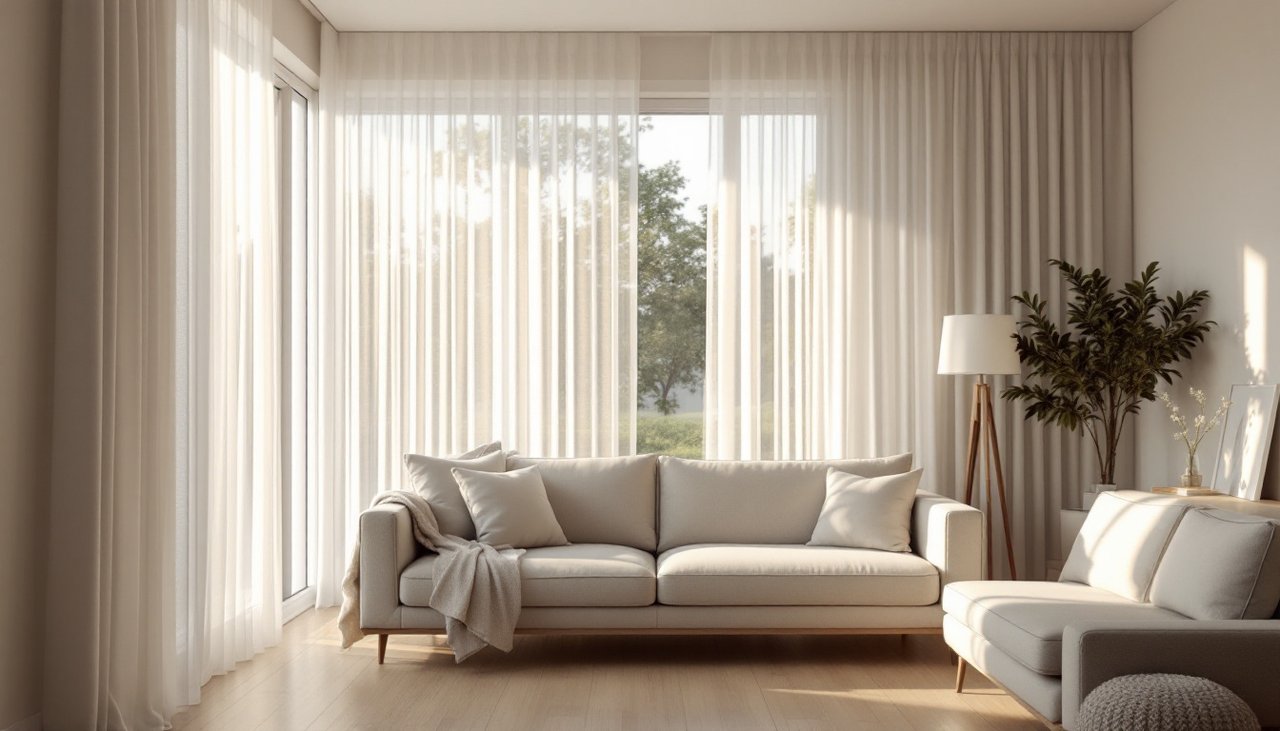
The weave of a sheer curtain decides almost everything about how it behaves: how much light comes through, how clearly you can see out, and how much of your room people can see in. A tighter weave gives softer light and stronger daytime privacy. An open weave gives the brightest room and the clearest view. Colour shifts that balance again, and at night the whole picture changes once your lights go on.
This guide works through the choices that shape how a sheer performs: the weave, the colour, the fullness, the way each window faces and what we check when we measure, so you can judge a sample with confidence. If you are planning sheers for a living room and want the wider picture, from large sliders to street views, start with our guide to sheer curtains for the living room, then come back here to narrow down the fabric.
If you would like to feel the fabrics first, visit our showroom and compare weaves side by side in daylight. Then book an in-home measure through our contact page and we will check the light on your own windows before anything is made.
What does a sheer curtain actually do?
A sheer is a light, see-through curtain that sits between you and the glass. Its job is to soften the light, not to stop it.
Here is what a good sheer does well:
- Turns harsh, direct sun into an even glow across the room
- Takes the edge off glare on screens and glossy floors
- Gives you privacy from the street during daylight hours
- Helps protect floors, rugs and furniture from UV fading
- Makes a room feel finished without closing it in
And here is what it will not do on its own: make a room dark, or hide you from the street once your lights are on at night. Keep those two limits in mind, because they shape almost every choice below.
UV matters more here than many people expect. New Zealand has some of the highest UV levels in the world, according to SunSmart, and the same sunlight that burns skin also fades timber floors and fabric sofas over time. A sheer is one of the gentlest ways to cut that back while keeping the room bright.
Which sheer fabric should you choose?
Most sheers fall into a handful of fabric families. Each one hangs, filters and wears a little differently.
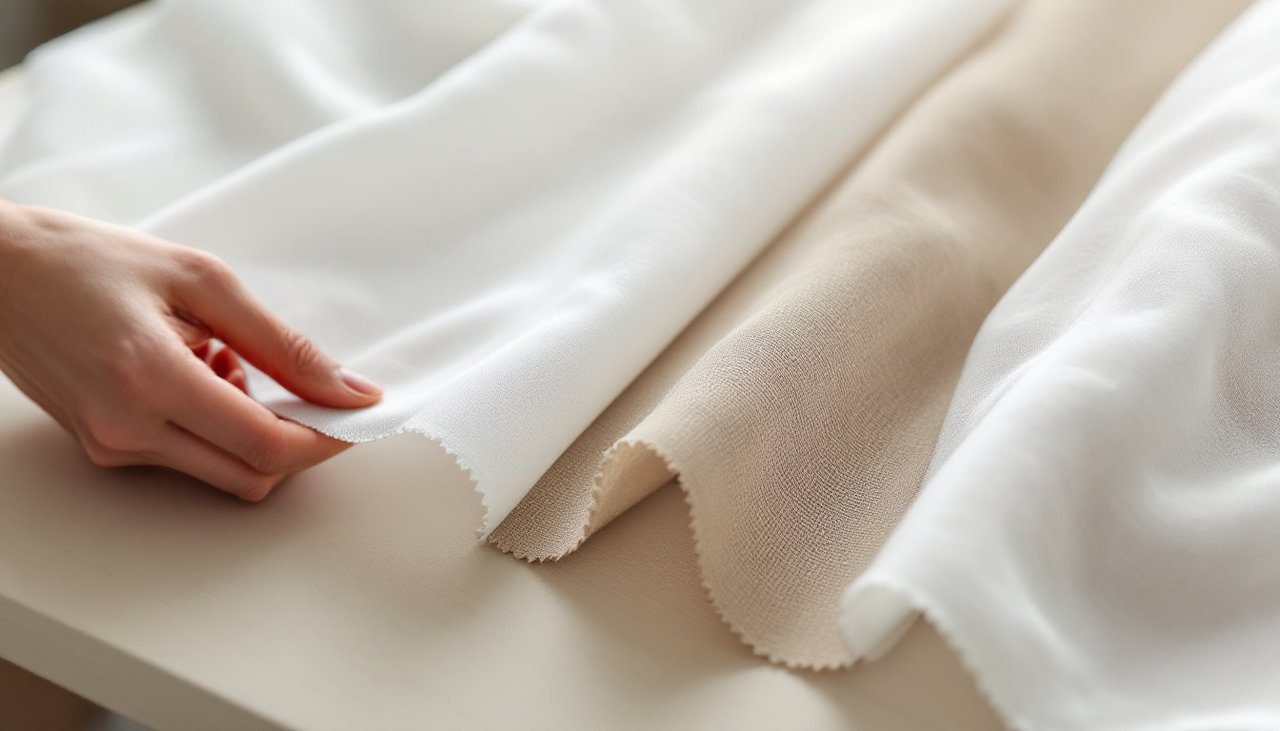
| Fabric type | How it looks | Light and privacy | Good to know |
|---|---|---|---|
| Polyester voile | Fine, smooth and crisp | Bright light, lighter daytime privacy | Easy-care, holds its shape, the classic white sheer |
| Linen-look polyester | Slubby, natural texture | Softer light, a little more privacy | The relaxed linen feel with fewer creases |
| Linen or linen blend | Organic, gently uneven weave | Soft, diffused light | Beautiful drape, relaxed creasing is part of the look |
| Tight-weave sheer | Denser, more opaque surface | Strongest daytime privacy and glare control | Great for street-facing rooms and sunny aspects |
A quick way to narrow it down: if you love a clean, contemporary room, look at smooth voiles. If your home leans natural, with timber, wool and plants, linen and linen-look sheers usually sit more comfortably.
You can see how we make up S-fold, white and linen styles on our sheer curtains page.
How does the weave change the light?
Two sheers in the same colour can light a room very differently, and the reason is how the yarns are put together. Here is what to look for when you hold a sample:
- Yarn thickness. Fine yarns let more light slip between them, so the fabric glows and the view stays clear. Thicker, slubbier yarns catch more light on their surface and scatter it, which softens the room and blurs shapes behind the fabric.
- How closely the yarns sit. The small gaps between threads are where both light and sight lines pass. Smaller gaps mean softer light and more privacy, larger gaps mean a brighter room and a clearer view.
- Surface texture. A smooth voile passes light fairly directly, so you can still pick out the edges of trees and buildings outside. A textured linen or linen-look weave breaks the light up, so the glow looks even and outlines fade.
- Sheen. A slight lustre bounces a little more light back towards the street, which can help daytime privacy, while a matt finish reads calmer and more natural indoors.
None of these is better or worse on its own. The right mix depends on whether that window is mainly there for the view, for light, or for privacy.
How sheer is too sheer?
This is the question that trips people up most. A fabric that looks lovely and airy in your hand can feel exposed once it is hanging on a street-facing window.
The simplest test is to hold the fabric up to daylight, ideally against a window, and look at it from both sides. From inside, you are checking the light. From outside, you are checking how clearly you can make out shapes behind it.
| Weave | Daytime view out | Daytime privacy | Best for |
|---|---|---|---|
| Open weave | Clear, almost unobstructed | Light | Upstairs rooms, rooms facing gardens or water |
| Medium weave | Softened but still visible | Good | Living and dining rooms with some street exposure |
| Tight weave | Blurred outline | Strong | Ground-floor bedrooms, rooms right on the street |
A few practical pointers:
- Brighter outside light means more privacy inside, so a north-facing room can carry a lighter weave than a shaded one
- Lighter colours such as white and ivory screen the view into your room better during the day, while darker colours give you a clearer view out but let people see in more easily
- If you are unsure between two weaves, choose the tighter one for any ground-floor room
It also helps to look at a sample at more than one time of day. Morning light, midday sun and late afternoon light all change how see-through a fabric looks, so a weave that feels private at noon can look more open in the softer light of early evening, just before the lamps go on. When we visit for the measure, we can hold samples against the actual window you are dressing, so you can step outside and look back at it from the footpath or driveway.
Will people see into your home at night?
Yes, once your lights are on, people outside can see more. Sheers work by being brighter on one side than the other. During the day the bright side is outside, so people looking in see the glow of the fabric rather than you. At night the room is the bright side, and the effect flips.
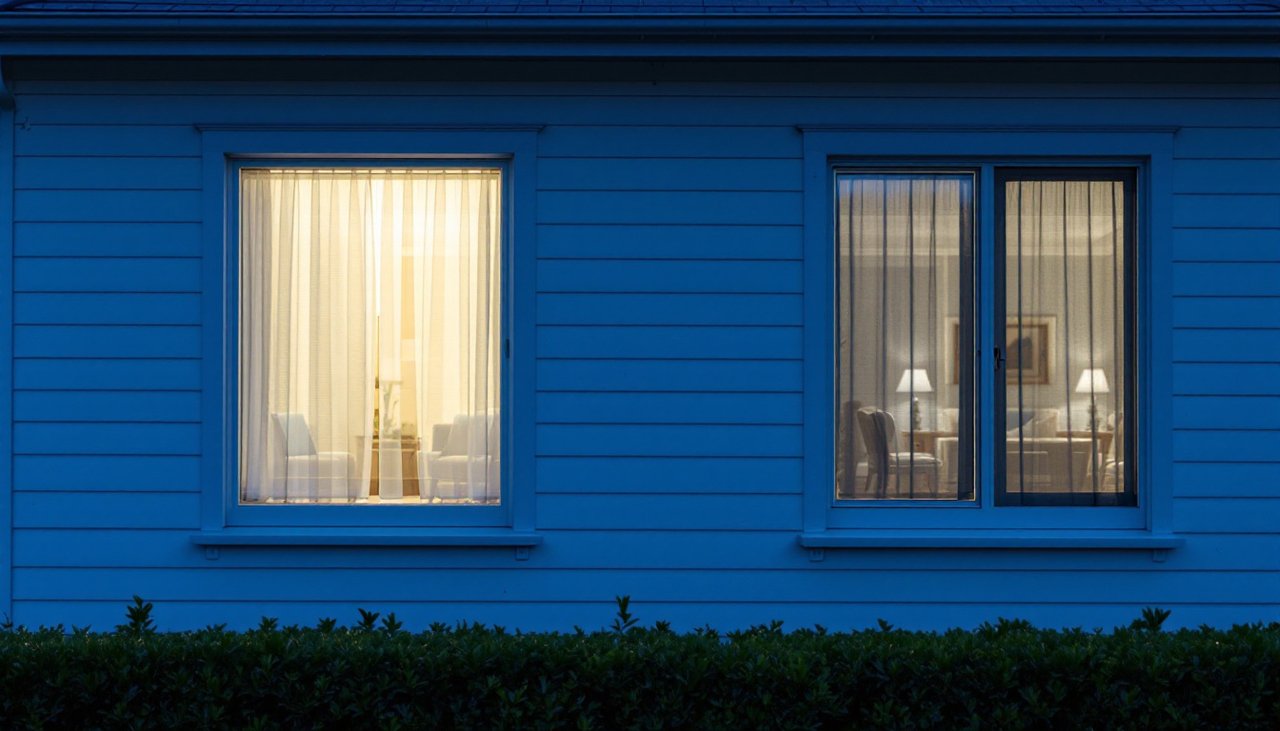
That is why so many homes run two layers: a sheer at the front for the day, and a blockout curtain or blind behind it for the evening. You get the soft daytime look and full privacy at night from one window.
If that sounds like your setup, our guide to double track curtains explains how the two layers sit on one track and how they are opened and closed. For a room you only use in the day, such as a sunroom or home office, a single sheer is often enough.
A few things make night privacy better or worse when a sheer is the only layer:
- Where your lights sit. A lamp close to the window throws your outline straight onto the fabric. Lights further back in the room, or pointed at the ceiling, keep the sheer less revealing.
- The weave. A tight weave or a textured linen-look blurs shapes more than an open voile, although no sheer hides a lit room completely.
- The colour. Lighter colours spread lamp light across the fabric and soften outlines a little, while darker sheers tend to show more of the room behind them once it is lit.
For bedrooms and any room right on the street, a second layer is still the dependable answer for the evenings.
White, ivory or grey: which colour works best?
Colour changes the light in the room more than most people expect, because the daylight passes through the fabric.
- Bright white gives the crispest, cleanest light and suits modern spaces and coastal palettes
- Ivory and cream soften the light slightly and sit nicely with timber and natural tones
- Oatmeal and natural linen give a relaxed, textured look and hide marks well
- Soft grey cuts a little more brightness and suits rooms with cooler, darker finishes
A tip worth remembering: judge colours in daylight against glass, not flat on a table. A cream that looks almost white indoors can read quite yellow against strong afternoon sun, and a crisp white can look slightly blue on a shaded south-facing window. Matching sheers to your wall colour is less important than matching them to the light the room actually gets.
Colour and weave also work together. A tight weave in a deeper tone, such as grey or oatmeal, gives noticeably softer light than the same weave in white, which can be useful in a room that gets strong sun for most of the day. In a room that is already on the dim side, a white or ivory open weave keeps as much brightness as possible while still taking the edge off the view in from outside.
Does fullness change light and privacy?
Fullness is how much fabric is gathered across the track compared to the width of the window, and it matters for more than looks. When a sheer is drawn across, the folds create layers of fabric, so a fuller sheer puts more weave between you and the street.
As a rough guide, sheers usually look their best at around two to two and a half times the track width. With too little fabric the folds stretch flat, the weave opens up and more light and sight lines slip through. With more fabric the folds are deeper, the light is softer and you gain a little extra privacy without moving to a denser fabric.
That makes fullness a handy adjustment. If you love an open voile but the window faces the street, a fuller make can bring its privacy closer to a medium weave while keeping the airy look you chose it for.
How does the direction a window faces change the weave?
The same fabric can feel very different on two windows in the same house, because the light reaching each one is different. Thinking about aspect is often the quickest way to choose between two weaves you like.
- North-facing windows get bright light for much of the day. That strong outside light helps daytime privacy, so a light or medium weave usually works well.
- South-facing windows get softer, indirect light. A tight weave can make these rooms feel dim, so an open or medium weave in white or ivory keeps them brighter.
- East-facing windows get low, direct morning sun. A medium weave softens the early light without dimming the room for the rest of the day.
- West-facing windows get strong, low sun later in the day, which is the hardest light to manage.
Across Auckland, west-facing rooms tend to need the most help, because the late sun comes in low and straight onto screens and sofas. A slightly tighter weave there makes the room usable through the whole afternoon without having to close everything up.
How do we check light and privacy at your measure?
At the measure, we come to your home, measure each window and talk through how you use the room. We look at which way each window faces, how much of the room the street can see and how the light moves through the day, so the weave and colour you liked in the showroom suit your real conditions. Then we confirm a detailed quote, with no obligation to go ahead.

Every sheer is made to measure in our own workshop, cut to your exact track width and drop, then fitted by our team in your home.
Timing depends on the fabric and heading you choose, so we confirm the lead time for your sheers at the measure, before you decide to go ahead.
If you are choosing sheers for several rooms, we can compare a few weaves on each window in turn, so every room gets the balance of light and privacy it needs rather than one fabric chosen for the whole house.
To have this done on your own windows, book an in-home measure through our contact page and we will bring samples to compare against the glass in each room.
What else do people ask before buying sheers?
Do sheer curtains make a room darker?
Only slightly. A sheer filters light rather than blocking it, so the room stays bright but the light becomes softer and more even. Tighter weaves and darker colours will reduce brightness a little more than an open white voile. If you want a room that stays bright through the day but can go fully dark at night, the usual answer is a sheer at the front with a blockout curtain or blind behind it on the same window.
Can I use sheers on large sliding doors?
Yes, sliding doors are one of the places sheers work best. On wide sliders, an S-fold sheer on a track is usually the easiest choice, because it glides smoothly and stacks neatly to one side so you can walk straight through the doorway. We measure the stack space when we visit, so the sheer clears the opening when it is pulled back and you do not lose any of the door width you use every day.
Do sheers need lining?
No, sheers are designed to be unlined, because the whole point is to let light through. If you want more privacy, the better options are a tighter weave, a slightly fuller make, or a second layer of blockout curtains or blinds behind. Adding a lining to a sheer usually makes it hang stiffly and lose the soft, floating look that makes sheers worth choosing in the first place.
How do I keep sheers looking fresh?
Most sheers only need a gentle shake and a light vacuum with a soft brush attachment every few weeks to keep dust down. When they need a proper clean, follow the care label for your fabric, since voiles, linen-look polyesters and natural linens are each treated a little differently. Rehanging sheers while they are still slightly damp helps the folds settle back into shape without much ironing.
Ready to find the right sheer for your windows? Visit our showroom to see the fabrics up close, then head to our contact page to book an in-home measure, and we will measure every window and recommend the weave, colour and fullness that suit each room.