Sheer Curtains for Living Rooms That Work Day and Night
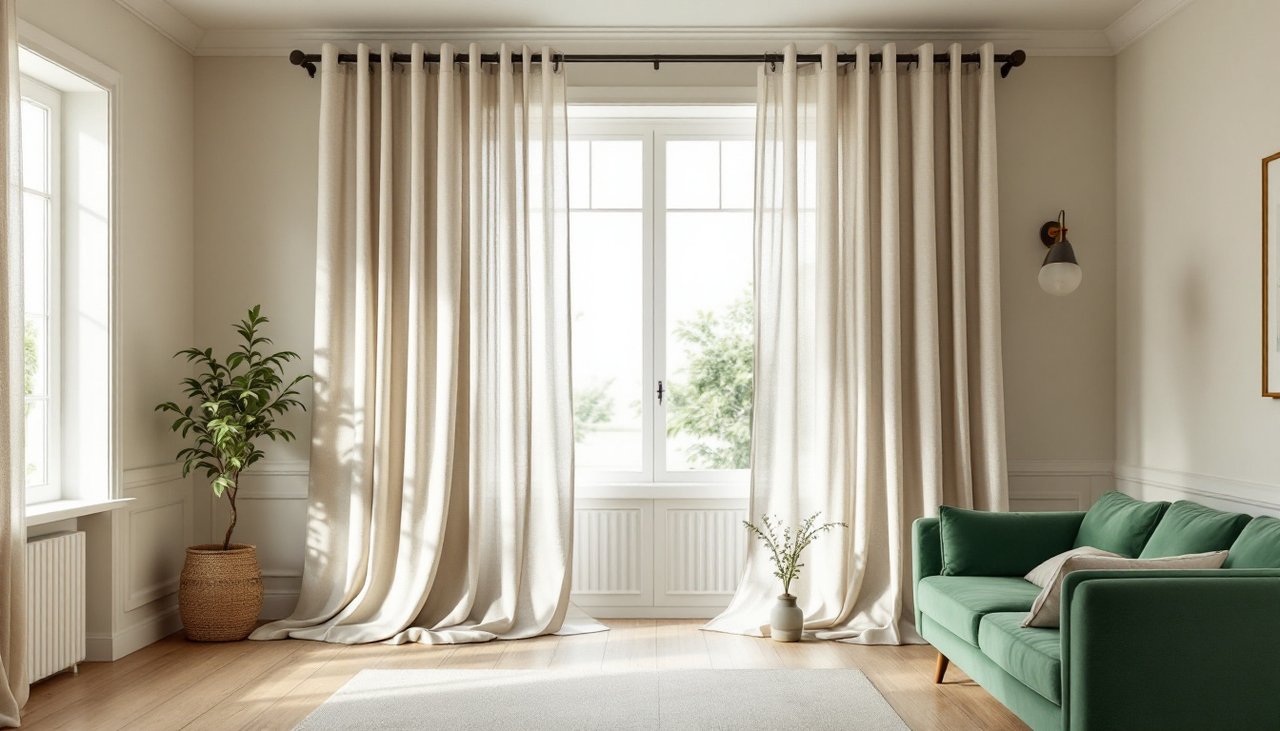
Picture a west-facing lounge in an old villa, and the person who owns it, call her Anna. She is sure the sheers will be the easy part. Of everything in the lounge makeover, they are the one decision that needs no thought. She holds up the crispest, brightest white voile she can find and pictures the room filled with clean light.
Her partner Rob wants something with more texture. She talks him out of it. White keeps a room bright, she says. Everyone knows that.
Now picture the week after those sheers go up.
By Thursday afternoon Anna has stopped sitting in her favourite chair. The lounge looks west across the street, and when the late sun hits that bright white fabric, the whole window turns into a glowing panel. It is not soft light. It is glare, spread evenly across the glass. The timber floor, the green sofa and the prints on the far wall all look flat and grey beside it.
Then comes Friday night. With the lamps on and the street dark, Rob walks out to the letterbox and looks back at the house. He can see straight into the lounge. Not vague shapes. The bookshelf. The television. Anna on the couch with her feet up.
None of this means she has picked a bad fabric. It means nobody has asked her the one question that matters before the order goes in.
What do you want that window to do late in the afternoon, and what do you want it to do once the lamps are on?
That question is what the rest of this living room story answers. The whitest sheer is rarely the one that makes a lounge look brighter, and the fabric you fall for under shop lights is often the wrong one for the window you actually live with.
If you are choosing sheers for your lounge, the quickest way to skip Anna's week is to book a free measure and quote at home, so the fabric, the track and any second layer are judged against your own window before you commit.
The Sheer That Looked Perfect Under the Showroom Lights
Showrooms are lit to make fabric look good from every angle. Overhead lighting is even, there is no direct sun, and you are usually looking at a sample at arm's length with a wall behind it.
Your living room window works the other way round. Light comes through the fabric, not onto it. That single change is why a sheer can look calm and creamy on a rack and then read as stark, bright white once it is hanging in front of glass.
Bright optical white has the least colour of its own, so it passes along whatever the sun gives it. On a south-facing window that can look lovely and fresh. On a west-facing lounge in strong Auckland afternoon sun it can make the whole pane shine.
So judge every sample backlit. Hold it up against a window, ideally one facing the same way as yours, and look at it from where you will actually sit. If you can, look at it at the time of day you use the room most.
Choose the sheer for the window you have at 4pm and at 9pm, not for the one under the showroom lights.
What Goes Wrong When the Afternoon Sun Arrives
Anna's problem is not that her sheers let in too much light. It is that they let it in without changing it.

A good living room sheer does three jobs at once in daylight. It softens glare so you can see a screen or a face without squinting. It keeps the room private from the street. And it lets enough light through that the space still feels open.
The variables that decide how well it does those jobs are fabric choices, and they are worth understanding before you look at a single colour.
Weave density. A tighter weave diffuses more light and gives more daytime privacy. A looser, more open weave keeps more of the view and looks lighter, but scatters less glare.
Texture. Slubbed, linen-look fabrics and other textured weaves break up direct sun far better than a smooth, flat voile. The light catches in the irregular threads instead of passing straight through.
Colour. Ivory, oatmeal, soft grey and natural linen tones take the edge off bright sun. They also tend to make timber floors and painted walls look richer, because the light reaching them is a little softer.
Fullness. This is the one most people underestimate. More fabric gathered across the track means more layers of fibre between you and the glass when the sheer is closed. A skimpy sheer in a lovely fabric still looks thin and lets glare through the gaps between folds.
Strong sun is part of the picture here. NIWA, now part of Earth Sciences New Zealand, monitors UV levels across New Zealand and regularly reports high to very high UV levels. A sheer puts a layer of fabric between that sun and the room, and a denser, more textured weave generally softens it more than a fine, open one.
For a window like Anna's, the better choice is an ivory linen-look sheer, slightly tighter in the weave, made up with noticeably more fullness than her first set. Same window, same sun. The difference is that the light arriving on the sofa now looks like daylight rather than a spotlight.
Why Night-time Changed Everything
The letterbox moment is the one that catches people out, and it is not a fault in any particular fabric.
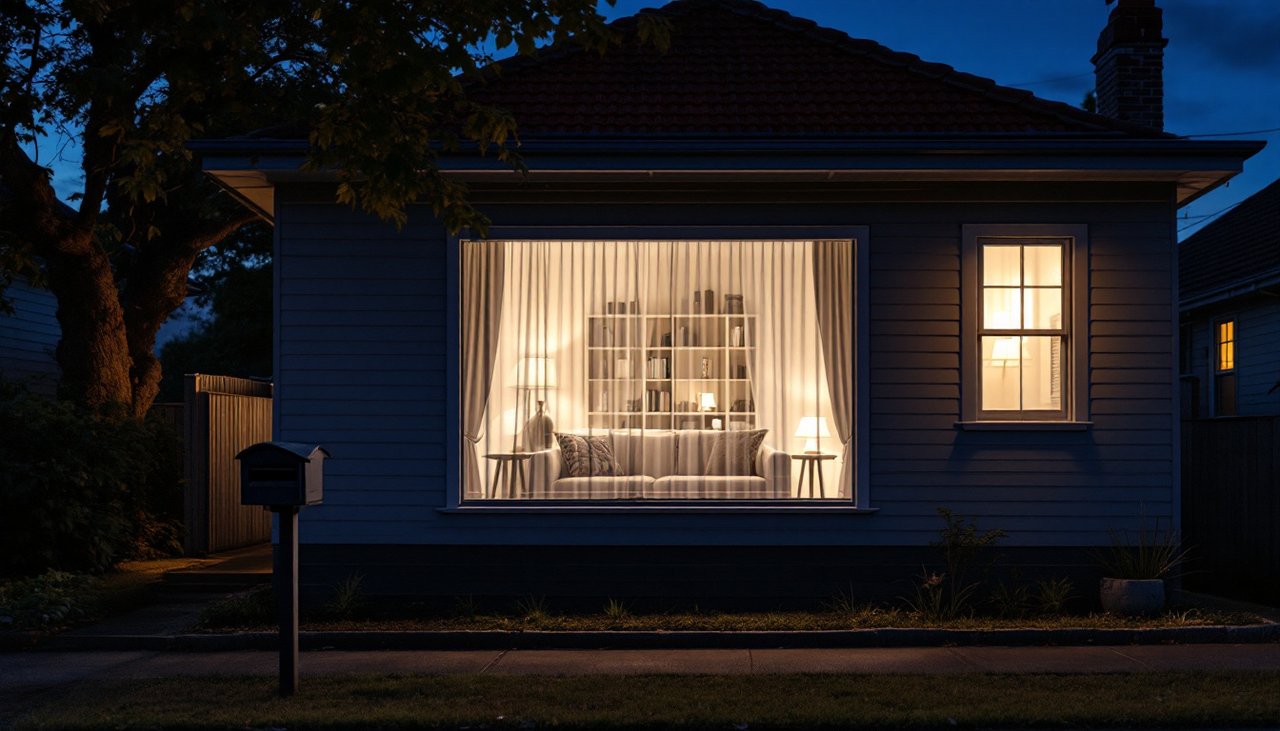
Every sheer works on a simple principle. You see through it towards whichever side is brighter. By day the outside is brighter, so people on the street see a soft wall of fabric while you look out. At night, once your lamps are on and it is dark outside, that flips. The inside is now the bright side, and the sheer becomes far more see-through from the footpath.
A tighter weave or a darker tone helps a little. A sheer on its own rarely solves it.
So the real question for a living room is how much night-time privacy that particular window needs.
- Street-facing lounge, close to the footpath: plan for a second layer behind the sheer, usually a blockout curtain or a blind on the same window.
- Lounge facing a private garden or a view with nobody looking in: a sheer on its own is often all the room needs, day and night.
- Somewhere in between, such as a neighbour's deck at an angle: a tighter, textured sheer may be enough, but test it at night before deciding.
Anna's window is firmly the first type. The fix is to keep the new ivory sheer at the front and add a blockout curtain behind it on a second track. If you are heading the same way, our guide to how sheers and blockouts work together on a double track walks through the setup in detail.
The Second Choice: Heading, Length and Stack
Once the fabric is right, the way the sheer hangs decides whether the room looks finished.

S-fold, also called wave fold, hangs in smooth, continuous waves along a track. It looks tailored and modern, stacks back neatly beside the window, and suits most contemporary living rooms, because it keeps its shape whether the sheer is open or closed.
A more traditional gathered look can suit a villa or a bungalow with high ceilings and period detail, where a fuller, more relaxed drape fits the architecture. If that is your house, raise it at the measure and we will talk through the heading options that suit the window.
Length matters more in a lounge than anywhere else. A sheer that stops just above the floor looks crisp and is easy to live with around a busy room. One that kisses the floor looks more relaxed and generous. A sheer that stops short of the floor, or hangs halfway down a wall, almost always looks like a mistake in a living space.
Stack is the hidden cost of a big window. When the sheer is open, the fabric has to sit somewhere. If the track only spans the glass, that stack eats into your view and your light. Extending the track past the frame lets the sheer pull clear of the window, which makes the room look bigger and the glass look wider. In a lounge with sliding doors this matters even more, because a stack that sits over the opening gets pushed aside every time someone walks out to the deck.
Anna's first set hangs on a track that stops at the frame. Run the track past the window on both sides instead, and with the sheers drawn back, the view across the street finally looks like it belongs to the room.
What Changes When You Choose by Room, Not by Swatch
In this imagined lounge, make those changes and the room becomes a different space. Not because the new fabric is more expensive or more fashionable, but because each decision is made for that window rather than for the sample in Anna's hand.
Here is the order that works, and the one we would suggest for any living room.
- Start with the window, not the fabric. Which way does it face, when do you use the room, and who can see in?
- Decide the night-time job. Sheer only, or sheer with a blockout layer behind it? This decides the track before anything else.
- Pick weave and texture for the daylight job. Tighter and more textured for strong sun or a close street. Lighter and more open for a soft aspect or a view you want to keep.
- Choose colour backlit. Hold samples against a window, look from your seat, and lean towards softer tones on bright aspects.
- Set heading, length and stack last. These are what make the finished room look intentional.
Every one of those steps is easier with someone standing at your window. A measure in your own home lets the fabric, the track length and any second layer be planned together, so you are not choosing one piece and hoping the rest will work around it.
This is also where made to measure earns its place. Living room windows in older New Zealand homes are rarely standard sizes, and ready-made sheers tend to be either too short, too narrow or too skimpy in fullness. Our sheers are made to measure in our own workshop to your exact window, then fitted by our team so the drape and stack sit the way they were planned. You can see the styles and fabrics on our sheer curtains page.
Why the Measure Should Come First
Here is the timing, plainly. Custom sheers are made to your window in the fabric, fullness and heading you choose, and that takes longer than picking a ready-made pair off a shelf. Your quote confirms the timing for the fabric you settle on.
That is why the measure is the step to book first. The sooner the window is measured, the sooner the order goes in, and the sooner you are living with the right sheer. Wait until the glare bothers you enough to act, and you are starting the whole process just as you want it finished.
That matters most in living rooms, because the lounge is the room everyone sees and uses most. It is also the room where low, late sun shows up every flaw in the wrong sheer.
If your lounge has a window that glares in the afternoon or turns into a shop front at night, do not put up with another afternoon of squinting. We will plan the sheer, the track and any layer behind it around that window, with fabric samples you can hold up against your own glass. Book a free measure and quote and we will help you choose the right sheer for your lounge.
Frequently Asked Questions
What colour sheer is best for a living room?
Softer tones such as ivory, oatmeal, natural linen or pale grey usually work best in living rooms with strong sun, because they take the edge off glare and make floors and walls look richer. Bright optical white suits softer aspects, such as south-facing windows, where it reads as fresh rather than stark. Always judge the colour with the sample held against a window.
Can people see through sheer curtains at night?
Yes, once your lights are on and it is darker outside, sheers become much more see-through from the street. A tighter weave helps a little, but for street-facing lounges the usual answer is a blockout curtain or blind on a second track behind the sheer. That gives you soft, private light by day and far more privacy at night.
How long do custom sheer curtains take?
Custom sheers are made to your exact window after the measure, so they take longer than ready-made sheers bought off the shelf. Your quote will confirm the timing for the fabric and heading you choose. If you want them hanging before a particular date, book your measure early.
Should living room sheers touch the floor?
In most living rooms, sheers look best stopping just above the floor or lightly touching it. Just above the floor is crisp and practical in a busy room, while a light touch looks more relaxed. Sheers that stop well short of the floor tend to look unfinished in a lounge.