How Much Does It Cost to Have Curtains Made? NZ Prices Window by Window
Three quotes for the same Auckland lounge, three numbers that do not look like they describe the same job. One comes back at $900, one at $2,400, and the third is a single lump sum with the track buried somewhere inside it. You are left guessing whether the cheap one is a genuine saving or a curtain that will hang short and drag on its runners by next summer.
Curtain pricing stops being mysterious once you can see the four things that move it: fabric, fullness, lining and hardware. Below is what each of them does to the number, window by window, plus where quotes quietly leave things out.
How Much Does It Cost to Have Curtains Made in New Zealand?
As a planning figure, made to measure curtains in New Zealand sit broadly between $120 and $200 per square metre of window area, supplied and installed, GST included. Converted into actual windows, that looks like this.
| Window | Approximate size | Indicative installed range, NZD |
|---|---|---|
| Small bedroom or bathroom window | 1.2m wide by 1.0m drop | $150 to $250 |
| Standard bedroom window | 1.8m wide by 1.5m drop | $330 to $550 |
| Large lounge window | 2.4m wide by 2.1m drop | $620 to $1,000 |
| Ranchslider or wide opening, floor length | 3.0m or wider, full drop | $1,000 and up |
The lower end of each range is a sheer or an unlined curtain. The upper end is a lined blockout curtain in a mid range fabric. A designer weave, a curved track, or a double track carrying sheers and blockouts on the same window sits above the range rather than inside it.
Two things to hold on to. These are planning ranges, not a quote from any one workroom, and they price a window, not a room. A bedroom with two windows is two of these numbers.
If you would rather have a real figure than a range, a free in home measure is the shortcut: someone measures the finished drop, checks whether the existing track can be reused, and prices the fabric you actually chose.
What Is Actually Inside a Curtain Quote?
Every curtain quote is six line items, whether or not the supplier shows them separately.

- Fabric, priced per metre and then multiplied by fullness, which is why it dominates the total.
- Lining: unlined, standard lining, or a blockout lining that stops light at the weave.
- Making: the workroom labour behind hems, weights, pleating and finishing, which is what allows a curtain to finish at the measured drop rather than the nearest stock size.
- Hardware: track or rod, brackets, runners, ends, and joiners on a long run.
- Measure and install: someone on site with a laser, a ladder and the right fixings for your wall or reveal.
- Extras that appear on some quotes and not others: cord safety devices, packers for reveal fixing, and taking the old track away.
Fabric and lining together usually make up the largest share of the total, ahead of making and hardware. That is why two quotes for made to measure curtains can differ by a thousand dollars on the same window and both be honest. One has priced an entry level fabric, the other a designer weave at several times the price per metre.
So compare line items, not totals. A quote that names the fabric, the lining, the heading, the track and the install can be checked. A single number cannot.
Why Does Fabric Choice Move the Price So Much?
Because you do not buy one window width of fabric, you buy two to two and a half. Curtains are made with fullness so they gather into folds rather than hang flat, which means a 3 metre track needs roughly 6 to 7.5 metres of fabric width. Every dollar of difference in the per metre price is multiplied by that fullness before it ever reaches your quote.
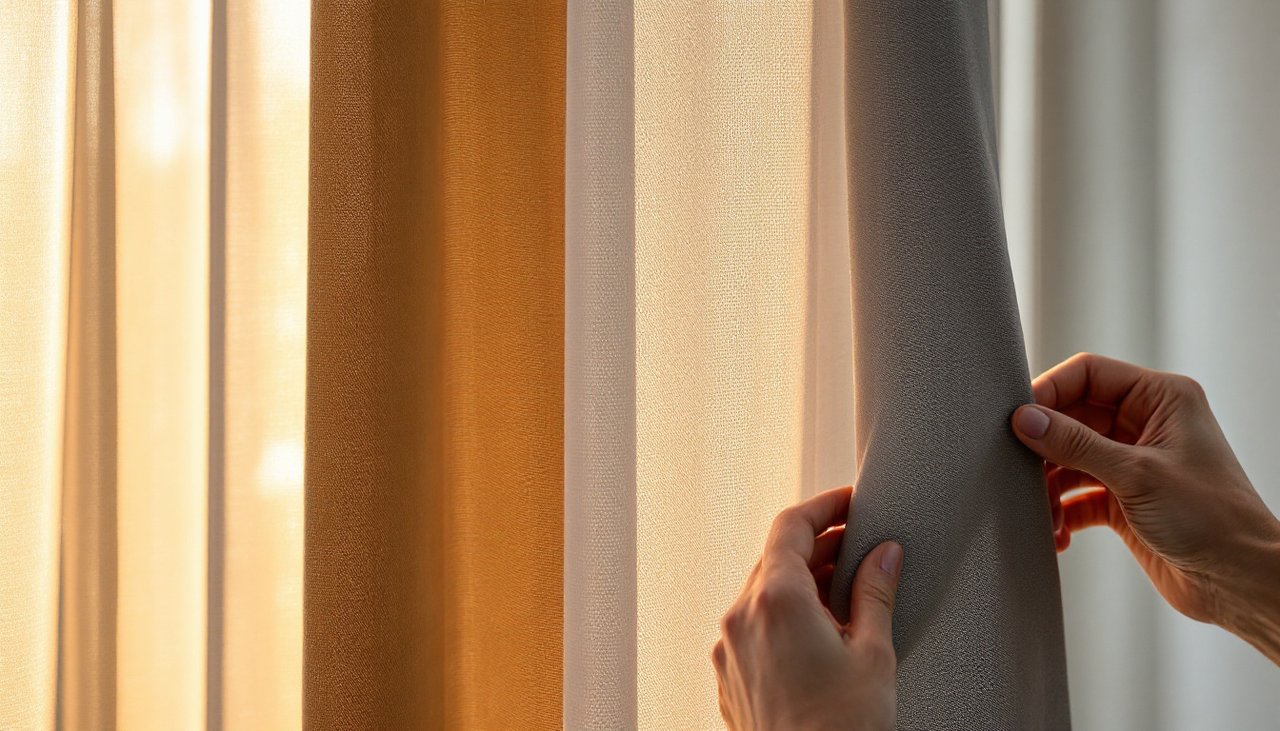
Rates differ from one supplier to the next, but the order by fabric family does not. Sheers sit at the bottom of the range, linen look drapes a step above them, and lined blockout cloth above that again. Measured per square metre the gaps look small. Across a house of large windows they compound into thousands.
Drop matters as much as width. Sill length uses noticeably less fabric than floor length, and floor length is the look most people want in a lounge. If the budget is tight, the practical move is usually not a cheaper fabric everywhere. It is floor length in the rooms you actually sit in and shorter drops where nobody is looking. It is worth seeing how the fabric families differ across the curtain range before you start pricing anything.
Does the Heading Style Change What You Pay?
Yes, in two places at once: fabric quantity and track.
Pencil pleat is the standard baseline and the most economical, usually made at about double the track width. Eyelet sits close to it. Pinch pleat adds hand work in the making. S fold, also called wave, gives the deepest and most even folds and is typically made at up to two and a half times the track width, so it uses around a quarter more fabric than a pencil pleat in the same cloth, and it needs a compatible track with its own carriers rather than a standard one.
The heading decision is therefore a fabric decision with a hardware decision attached to it. On a small bedroom window the difference is minor. On a 4 metre ranchslider in an expensive fabric, choosing S fold over pencil pleat can move that one window by several hundred dollars before anybody has changed the colour.
How Much Do Tracks, Rods and Motorisation Add?
A hand drawn track or a plain rod is a modest part of most quotes, and on a straight window it rarely changes your decision. The step change is motorisation. Suppliers price the track, the motor and the handset as separate lines, which puts a motorised track a few hundred dollars per window above a hand drawn equivalent, and further again on long runs, curved bays or a bridged double track.
Budget for the power supply as well. A motor needs either a socket within reach or an electrician to add one, and that cost sits with your sparky, not with the curtain quote. Motorisation earns its keep on windows you cannot reach comfortably: high level glazing, stairwells, wide living room runs, and rooms where opening and closing on a schedule is genuinely useful. On a standard bedroom window it is a preference, not a saving.
Are Ready Made Curtains Actually Cheaper?
On a standard sized window, yes, and it is worth being honest about that. Ready made curtains in New Zealand run from about $20 a pair at budget retailers to around $400 for a set from a specialist store. Made to measure on the same window is roughly $330 to $550 supplied and installed.
| What you are comparing | Ready made | Made to measure |
|---|---|---|
| Standard bedroom window | $20 to $400 per pair or set, depending on the retailer | $330 to $550 supplied and installed |
| Fit to the window | Fixed widths and drops, so you round up or live with a gap | Cut to the measured width and finished drop |
| Lead time | Off the shelf, carry it home the same day | Made to order, so ask for the current lead time in writing |
| Lining | Whatever that pair happens to come with | Chosen room by room, including blockout lining for bedrooms |
| Installation | Your own weekend, or $60 to $150 per window for an installer | Usually inside the quoted price |
| Best suited to | Rentals, spare rooms, standard windows, short stays | Odd shapes, wide openings, floor length looks, long term homes |
The comparison narrows quickly once the window stops being standard. On a wide opening you often buy two pairs and still get a join in the wrong place, and a ready made drop that is 15cm short reads as short from across the room for as long as it hangs there. Add an installer fee to a ready made pair and the two options can land closer than the shelf price suggests.
What Does a Full House Cost, Room by Room?
A whole home total is easier to think about as a band than as a figure. Curtains throughout a three bedroom home of about ten to twelve windows, in a mid range lined fabric, lands broadly in the $3,500 to $6,000 installed band. Packages built around entry level fabric and standard tracks come in under that. Larger homes and newer builds with tall glazing and multiple sliders climb well above it, and adding sunscreen roller blinds to the living areas is its own line rather than a rounding difference.
The spend is never even across the house:
- The lounge and any ranchslider are almost always the largest single line, because they combine the widest track with the longest drop.
- Bedrooms are the cheapest windows individually, but there are usually three or four of them.
- Adding sheers to living areas means a second layer and a second track on the same window, so treat it as its own line rather than an upgrade.
A useful sequence for an Auckland home is to price the living areas properly, do the main bedroom to the same standard, then work through the remaining bedrooms with plainer fabric. It protects the rooms you look at every day and keeps the total inside a range you chose on purpose.
What Should Be Included Before You Sign Anything?
Ask for these in writing, whoever you are getting the quote from:
- The fabric name and colour, the lining type and the heading style, not just the word curtains.
- The track or rod, its finish, and whether it is a single or a double track.
- Who is responsible for the measurement, and who carries the cost if a drop comes back wrong.
- Whether installation, fixings and removal of the old track are inside the price or added afterwards.
- The child safety devices supplied with anything corded.
That last point is moving from preference to compliance. Product Safety New Zealand publishes guidance on blinds and window shades with cords, and in June 2026 the Government announced mandatory safety standards for corded window coverings, under which newly supplied products will have to meet a recognised international standard, with a one year transition period for suppliers once the regulations are made. If you have young children, ask which safety standard applies to what is being installed and whether tensioners or cleats are included. Wand operated and motorised options remove the loose cord from the equation entirely.
How Long Does It Take From Measure to Install?
There are two timelines, and mixing them up is what causes bare windows on moving day. Stocked fabrics on standard tracks move quickly, because the cloth is already in the country and the workroom is only making up. Fully custom work runs considerably longer: an imported fabric, a curved or bridged track, or motorisation each add their own wait, and several weeks of manufacturing usually sit ahead of an installation date being scheduled at all. Ask any supplier for their current lead time in writing, since it moves with fabric availability and with the time of year.
Work backwards from the date you want the house finished, not forwards from the day you start looking. For a new build or a renovation, book the measure once the floors are down and the window trims are on, because the finished drop depends on both. Measuring earlier than that is guesswork, and guesswork on a drop is the one mistake fabric cannot forgive.
How Do You Keep the Cost Down Without Regretting It?
The levers that work, in the order they usually pay off:
- Spend on the windows you see daily and hold the line on the rest, rather than trimming the fabric grade everywhere.
- Keep floor length in the lounge and main bedroom, where a short drop is obvious, and accept sill length elsewhere.
- Choose plainer, wider width fabrics on the big openings, since fullness multiplies whatever you pick.
- Stage the house across two rounds if the total is uncomfortable. Living areas and the main bedroom first, remaining bedrooms later.
What rarely pays off is buying a fabric you do not like because it was cheaper per metre, or accepting a quote with no line items because the total looked good.
When you want your own numbers instead of ranges, book a free in home measure and quote through the contact page. Someone comes to you, measures every window properly and prices the fabric you chose, with no obligation to go ahead. If you would rather start with the cloth, ask to see samples in person before anyone talks about a total, because colour and weight read differently in your own light than they do on a screen.