Roller Blinds vs Vertical Blinds: Which Suits Which Window?
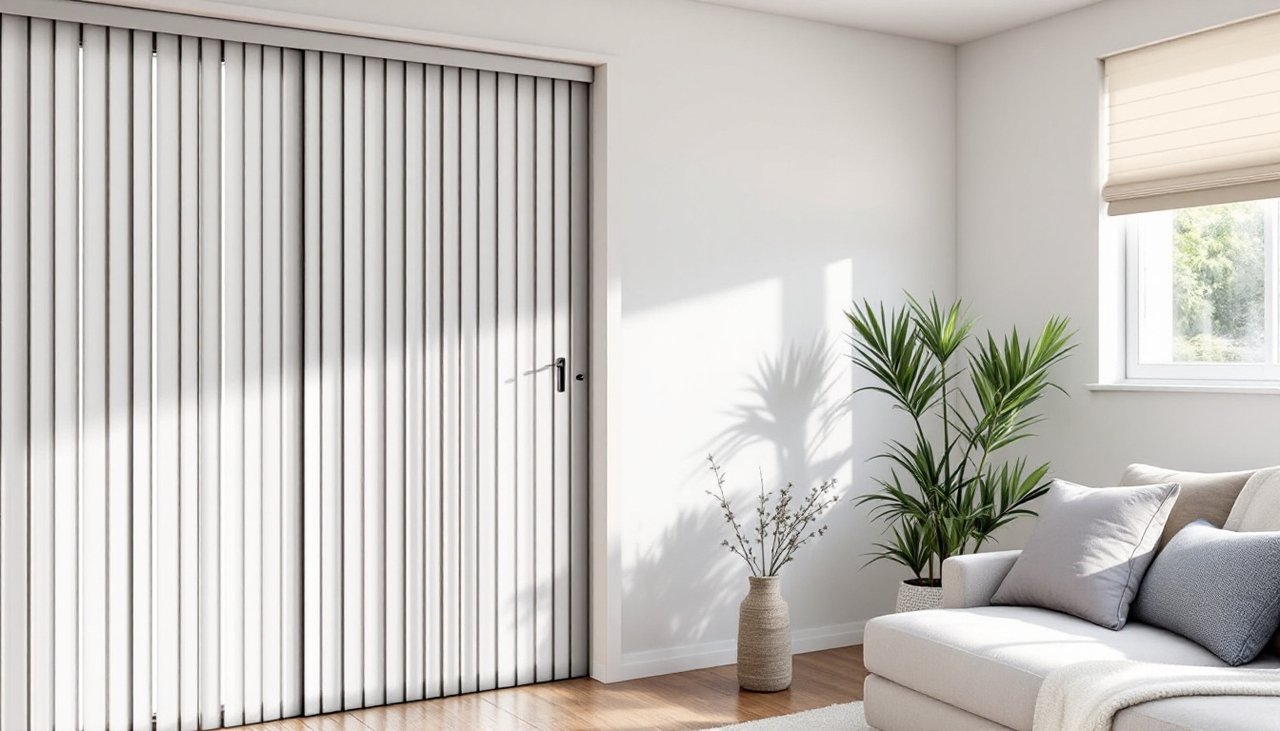
A 2.4 metre ranchslider in the lounge, three bedroom windows, one budget. One quote puts roller blinds on everything, the other puts verticals on the slider, and neither explains why the widest opening in the house is the line doing the damage. The real question is not roller against vertical as products. It is which one belongs on each opening, and what that choice costs you window by window.
Roller vs Vertical: What Each One Costs per Window
For a standard window of roughly 1.2m by 1.5m, both types sit in the same band: about $150 to $350 supplied and installed, with blockout roller fabrics running up to $400. Anything wider than that standard window is priced by the metre, so treat the band as a starting point rather than a flat rate.
One note on the numbers before the table, and it covers every figure in this guide. These are the ranges we see quoted around the New Zealand market for blinds supplied and installed. They are a sanity check on the numbers you are handed, not a quote from us, because on a standard window the choice between the two is a decision about light and operation rather than a way to save money.
| Blind type | Range we see, standard window | What moves the number |
|---|---|---|
| Sunscreen roller blind | $150 to $350 | Fabric openness, width of the opening |
| Blockout roller blind | $200 to $400 | Denser fabric, side channels, heavier tube |
| Vertical blind | $150 to $350 | Louvre width, track quality, span |
| Motorisation, added per blind | $150 to $400 | Motor type, battery or hardwired, remote or app |
Inside each band sits a second layer of choice that a price range never spells out. Roller fabrics are sold by openness, from a tight sunscreen weave that holds most of the glare back to a more open weave that keeps more of the view. Vertical louvres come in two common widths, 89mm and 127mm, and the wider louvre means fewer of them across the same span. Both sit inside the same headline range, which is why two quotes for the same window can read identically on paper and behave differently once they are up.
- On a standard window the two overlap at $150 to $350, so the blind type alone does not set your budget.
- Two quotes at the same headline number can sit on different fabric grades and louvre widths, so ask which grade you are being given.
- Motorisation is charged per blind on top of the base price, never folded into it.
Where Vertical Blinds Win: Ranchsliders and Doors You Walk Through
Blinds are priced by width and drop. A per window rate is shorthand for a standard opening, and a ranchslider is close to double that area, which is why one line on a quote can be worth three of the others. Ranchsliders in New Zealand homes commonly run 1.8m, 2.4m or 3.0m across, and the number climbs with every extra metre of track or fabric. This is the opening where the two products stop being interchangeable.
| Way to cover a 2.4m opening | How the price is built | What you live with |
|---|---|---|
| Two blockout rollers side by side | Two units at the per window rate, so roughly $400 to $800 on the ranges above | A visible join down the middle and two chains or two motors to operate |
| One wide roller blind | One unit, priced above a standard window for the wider fabric and a heavier tube | No join, but a large roll to lift and fabric width limits on some ranges |
| One vertical blind track | One track priced by width, commonly quoted under the two roller total for the same span | One wand or chain, and louvres stack to one side so the door still works as a door |
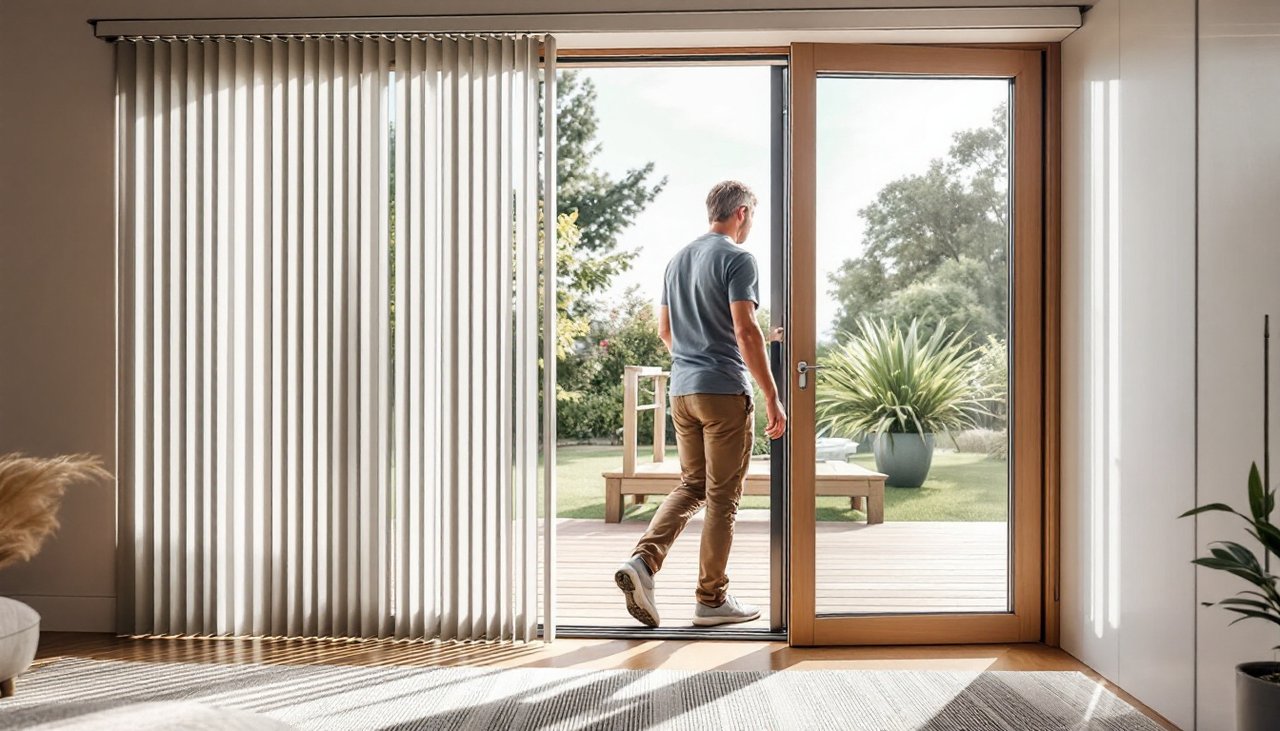
That is the whole case for vertical blinds on wide spans. You buy one track instead of two blinds, the louvres tilt so you can hold privacy without losing the light, and they clear the doorway you use every day.
The stack is the other half of it. Louvres draw back to one side and sit in a narrow bundle against the frame, so the walkway stays clear while the door is open. Most days you never open them at all, you just tilt, which is the difference between a covering that suits a door and one that fights it.
- On spans over about two metres, one vertical track usually costs less than two rollers covering the same width.
- Verticals suit doors because the stack sits to one side instead of hanging in the traffic path.
- Ask for wide openings to be priced as their own line so you can see what the span is really costing.
Where Roller Blinds Win: Bedrooms, Views and Standard Windows
On a normal window a roller is the cleaner answer. It sits flat against the glass, takes up almost no space in the reveal, and comes in fabric grades that run from an open sunscreen weave to a dense blockout, so one product covers two very different jobs.
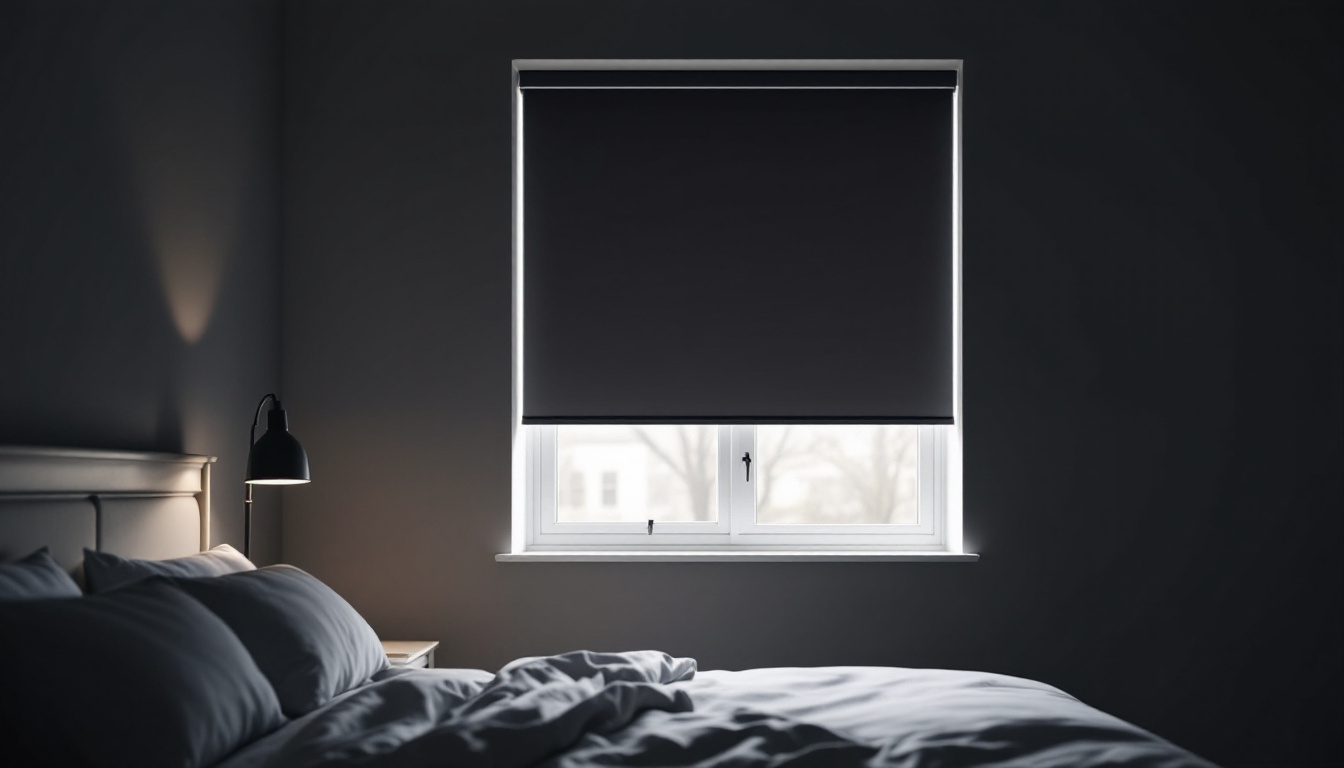
Bedrooms are the clearest case. A blockout roller with side channels stops light at the edges in a way louvres cannot, because a vertical blind has a gap between every louvre no matter how well it is made. If a room needs to be dark at five in the morning in December, that is a roller job. Side channels are the line to ask about here: they run down both edges of the blind to close that gap, and they are usually quoted as an addition per blind rather than sitting inside the base price.
Living rooms with a view are the second case. A sunscreen roller cuts glare on the television at the end of the day while you still see the garden, and it sits at the bottom of the price band. You will find both blockout and sunscreen weaves on our roller blinds page.
The third case is the window nobody thinks about, the small one over a bench or partway up a stairwell. A roller costs least there, takes almost nothing out of the reveal and needs no wand hanging beside it, which is why most houses end up with more rollers than anything else. Verticals are a width solution and rollers are a light control solution, and most houses need both.
What Is Inside the Number: Fabric, Control and Fitting
Four things carry the cost of a blind, and only one of them is the part you look at.
Fabric grade is the biggest lever. A basic sunscreen and a dense blockout sit about $50 apart per window at both ends of the ranges above, before anything else changes.
Hardware is next. Wider and taller openings need a heavier tube or a stronger track, and that is charged whether or not you notice it on the quote.
Control type is third. A chain is the base, a cordless spring or a wand costs a little more, and a motor is a line of its own.
Fitting is fourth. Most New Zealand quotes fold the measure and the install into the price rather than listing them separately, and where fitting is priced on its own it is usually a modest per blind charge. Check which way each quote is written before you compare two totals, because a lower number with the install stripped out is not a cheaper job.
Our curtains and sheers are made in our own workshop, and blinds are made to measure, supplied and fitted by us, so a quote is built around your openings rather than a shelf size. Compare the quotes you collect on fabric grade and control type, because the headline total hides both.
What Motorising Adds to Either Choice
Budget $150 to $400 per blind for motorisation, depending on whether the motor runs on a rechargeable battery or is hardwired during a build or renovation. It applies to both products, so it does not tilt the roller against vertical decision on price.
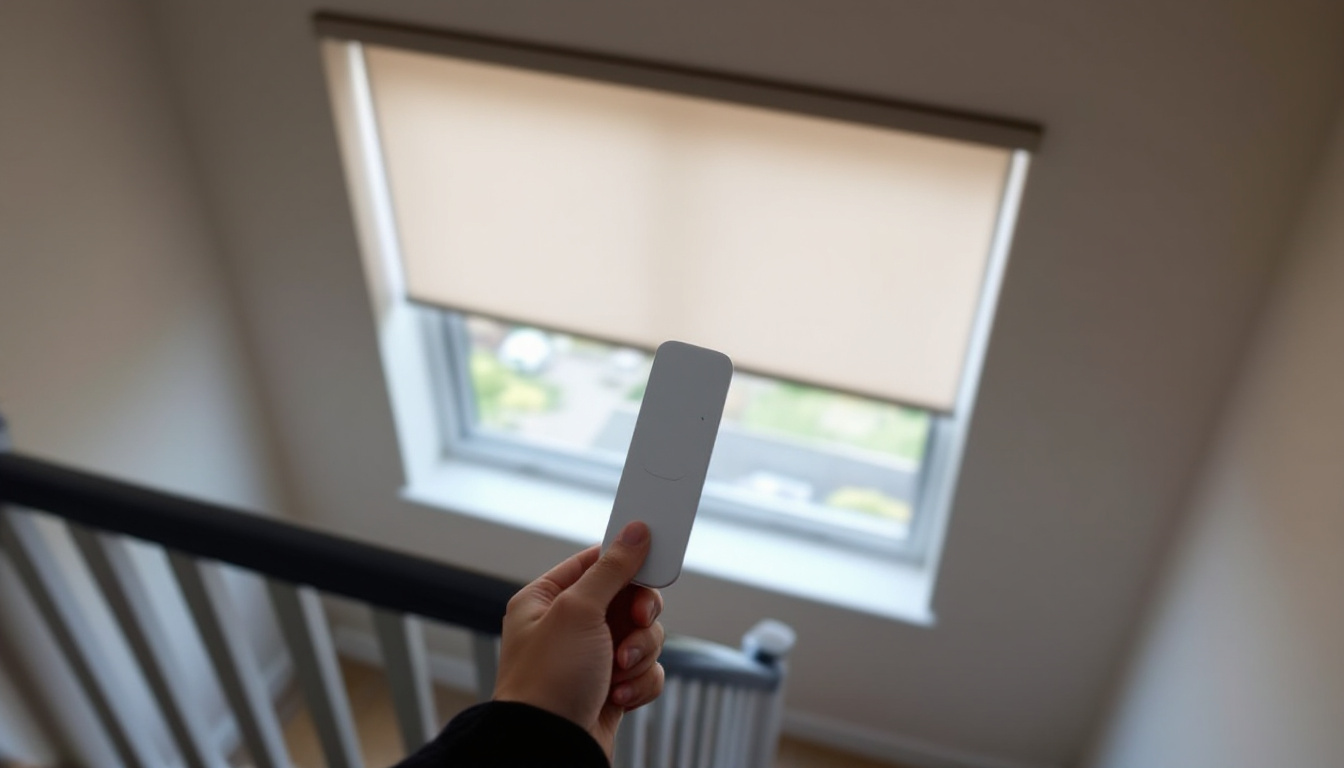
It is priced per blind, so it scales fast. A bank of five windows carries the upgrade five times, which can add more than $1,000 to a quote that otherwise looked settled.
Timing is the part people miss. Hardwiring is straightforward while the walls are open on a build or a renovation and awkward once the linings are on, so if there is any chance you will motorise later, have the cabling run now and put a chain or a wand up in the meantime.
It earns the money in three places: windows above head height, wide ranchsliders where a heavy roll or a long wand is awkward, and rooms where a whole bank should move together rather than one at a time. It earns nothing on a small bedroom window you walk past twice a day, which makes this a per window decision rather than a whole house one: motorise the two hardest openings and leave the rest on a chain or a wand.
The Cord Safety Question Behind Both Choices
Cords sit behind both products, and they are a real safety issue in New Zealand homes with young children. The Ministry of Business, Innovation and Employment publishes guidance on the risk and has been working towards safety standards for new corded window coverings sold here, set out on the MBIE corded blind safety page.
If there are small children in the house, the control system is a budget line rather than an afterthought. A cordless spring on a roller carries a small premium. A wand on a vertical removes the loop altogether. Motorisation removes it and adds convenience at once.
Tie down cleats are the low cost option, and they only work when they are actually screwed to the wall, which is worth being honest with yourself about before you rely on them. Decide it room by room: the cot room and the playroom are worth the safer control even if the spare room stays on a chain. Price that control into the original quote, because retrofitting it later means paying twice.
Which One Goes Where: A Room by Room Answer
Ranchsliders and doors you walk through: vertical. One track covers the span, the stack clears the doorway, and the louvres tilt for privacy without blacking out the room.
Bedrooms: blockout roller. That upgrade buys darkness a louvred product cannot match, and it is the one people rarely regret.
Living rooms with a view: sunscreen roller. Glare control at the bottom of the price band, with the garden still visible.
Wide living room windows that are not doors: either, and the deciding factor is usually whether you want the fabric to disappear into the reveal, which favours a roller, or a single track covering the whole width, which favours a vertical.
Kitchens and wet areas: judge the fabric spec rather than the blind type. Both ranges include wipeable fabrics, and the price gap between them is small.
The mix is also what moves your total. Every wide opening covered by one vertical track instead of two rollers takes a line off the quote, and every bedroom stepped up to blockout puts a little back on, so a house with verticals on the ranchsliders and blockout only where people sleep is the version that sits near the bottom of the ranges above.
Bottom line: put verticals where the opening is wide or you walk through it, rollers everywhere else, and spend the upgrade money on blockout where you sleep.
Book the Free Measure Before the Calendar Decides for You
Custom blinds are made to your openings, so the calendar matters as much as the price. Lead times move with the fabric, the product and how busy the workroom is, so ask what the current turnaround is while the measurer is with you, then count back from the date you want the windows covered and the booking date works itself out.
A free in home measure and quote gives you the one thing a price range cannot: your openings, your fabrics, your ranchslider, priced side by side as roller and vertical so you can see the difference on your own house. The measure comes to you, the quote is written against real numbers off your walls, and neither costs you anything.
Book your free measure and quote this week and you order with time in hand instead of chasing it.
Roller and Vertical Blinds: Quick Answers
Are vertical blinds cheaper than roller blinds?
On a standard window the two overlap at roughly $150 to $350 across the New Zealand market, so there is no automatic saving. The gap opens on wide spans, where one vertical track covers a ranchslider that would otherwise need two roller blinds.
Can you mix roller and vertical blinds in the same house?
Yes, and most homes end up that way. Verticals go on the ranchslider and any door you walk through, rollers go on the standard windows, and keeping the fabrics in one colour family holds the look together from the street.
Does a ranchslider cost more to cover than a standard window?
Yes. Wide openings are priced by width rather than at a per window rate, so a 2.4m slider sits closer to two windows than one. A single vertical track across that span is commonly quoted under two roller blinds covering the same width.
How long do custom blinds take to arrive?
It depends on the product and the fabric, and stocked ranges are quicker than anything made to your measurements. Ask for the current turnaround at the measure, because the order date, not the install date, is the one you control.