Double Track Curtains NZ: How Sheers and Blockouts Work Together
One window, two jobs. Through the day you want light and a view without the whole street looking into your lounge. At night you want the room dark and private. No single curtain does both, which is why a double track exists.
It is one of the more common things we fit in Auckland homes, and also one of the more common things people wish they had planned before the room was finished rather than after.
What a double track actually is
A double track is a single head assembly carrying two parallel rails. Each rail holds its own curtain, and each draws independently.
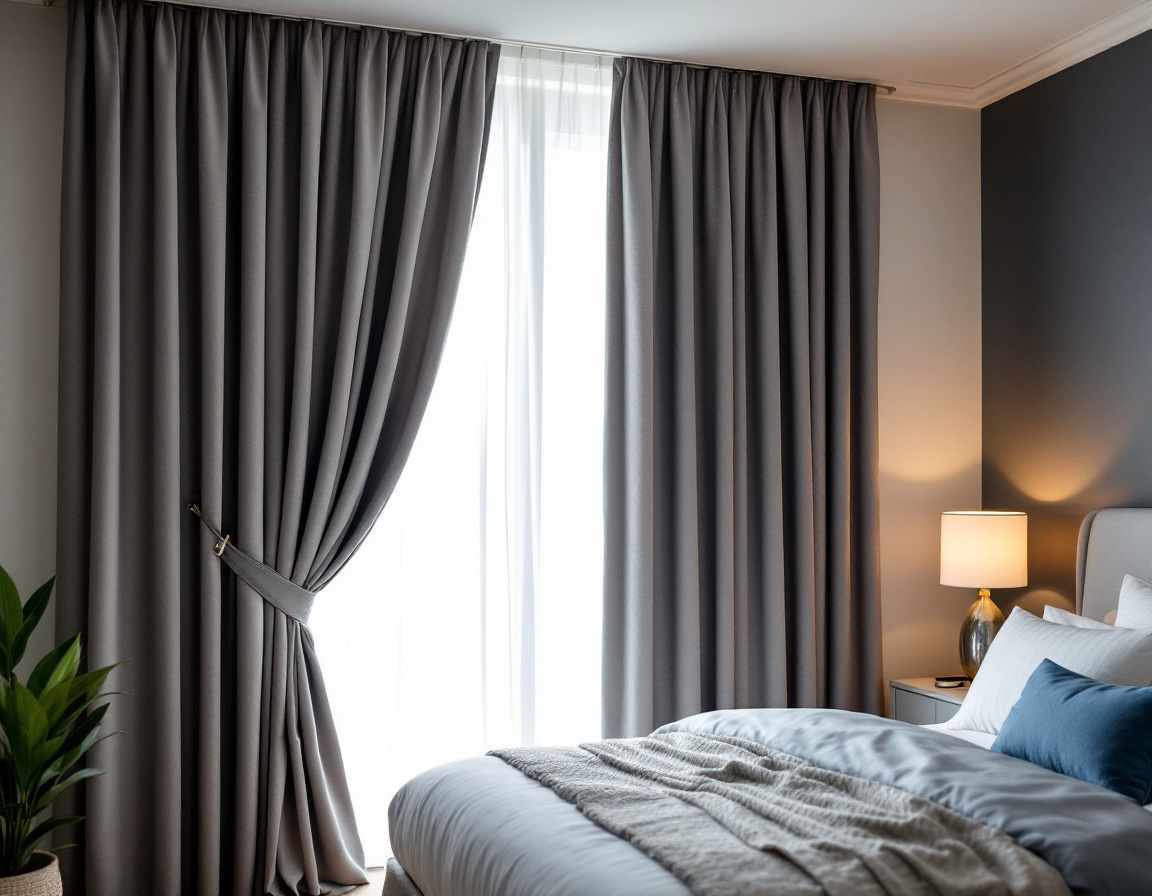
The usual pairing is a sheer curtain on one rail and a blockout curtain on the other. Through the day the sheer is closed and the blockout is stacked to the side. At night the blockout comes across and the room goes dark.
Both curtains are made to measure to the same window, in whatever heading style you choose, and the whole thing installs as one unit. From the room it reads as one window treatment, not two.
- One head assembly, two independent rails
- One sheer, one blockout, each drawing on its own
- The combination you set is yours to change through the day
Worth being clear about what a double track is not. It is not a curtain with a lining sewn behind it, which is a single curtain and moves as one piece. It is not two separate tracks mounted one above the other, which is possible but looks like what it is. And it is not the same as a pelmet or a track cover, which hides the hardware but does not add a second layer.
Which layer goes on which rail
This gets asked at nearly every measure, and both arrangements are used. Which one suits you depends on what you want the window to look like when the curtains are open, so it is worth deciding rather than defaulting.
Blockout on the front rail is the arrangement you will see most often in bedrooms. The blockout is the layer you tie back or stack to the sides, and the sheer stays closed across the glass behind it. Open, the room reads as a soft, light window framed by heavier drapes. This is also the easier one to live with if the blockout is the layer you move daily.
Sheer on the front rail puts the lighter fabric closest to the room. It suits spaces where the sheer is the feature and the blockout is there purely for night, because the blockout can sit hard against the glass and cover the window more completely from that position.
The practical difference is which stack you look at. A blockout stacks bulkier than a sheer, so whichever one is in front is the stack that reads when the window is open. We bring both fabrics to the measure and hold them in each order against the window before anything is ordered.
What a sheer does, and what it stops doing after dark
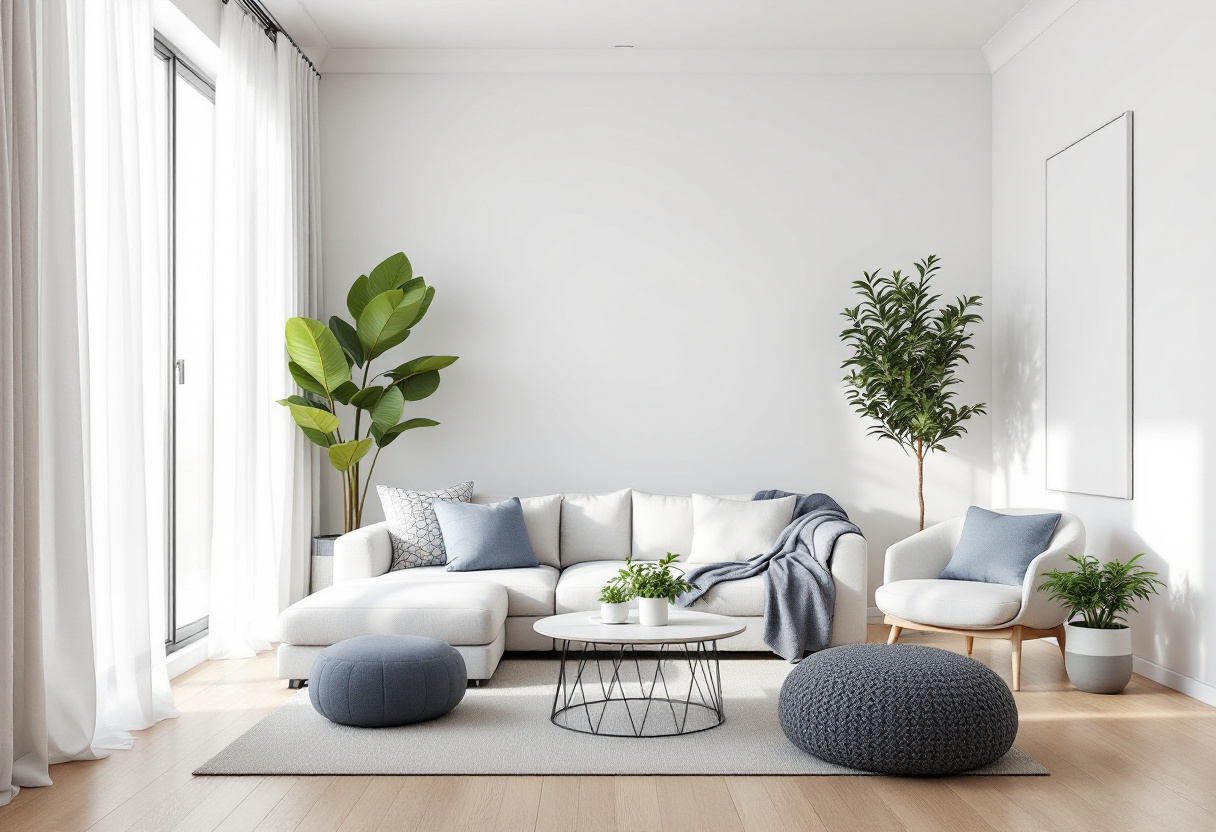
A sheer is a lightweight, semi-transparent fabric. Through the day it turns harsh light into a soft, even glow, gives you daytime privacy, and helps take the edge off UV on floors and furniture without blocking the outlook.
At night it behaves differently, and this is the point of the second layer. With your interior lights on and the street dark outside, a sheer becomes noticeably more see-through. The privacy you had at two in the afternoon is not there at eight in the evening.
Weave changes the daytime end of this. A tighter weave gives more daytime privacy and more UV filtering. A looser, more open weave pulls in more brightness and a stronger sense of space. Neither changes the night-time reversal, which is a physics problem rather than a fabric one.
- Sheers give daytime privacy and diffused light
- After dark, with lights on, sheers read as see-through from outside
- Tighter weave, more privacy; open weave, more brightness
Heading style and stack: the part that needs planning
Both curtains on a double track need a heading, and they do not have to match, though most people run the same style on both for a consistent look. You can see the full range of heading styles if you are still deciding.
The thing that actually needs planning is stack. Two curtains means two stacks, and both of them sit somewhere when the curtains are open. On a window with plenty of wall either side, you plan the stacks onto the wall and the glass stays clear. On a window that runs close to a corner or an adjacent opening, the stack has nowhere to go and ends up covering part of the glass.
That is a measuring decision and it is much easier to solve on paper than after installation. Extending the track past the reveal is the usual answer, and it is one of the reasons a double track wants a wider allowance than a single.
Fullness carries across both layers. Fullness is described as a multiple of the track width, and the range we publish for sheers runs 2 to 2.5 times the track width, with higher fullness giving a softer, more gathered look and better daytime privacy.
- Two curtains means two stacks to place
- Plan the track wider than the reveal so stacks clear the glass
- Sheer fullness typically 2 to 2.5 times the track width
Where a double track earns its keep
Living rooms and open plan. The clearest case. Used all day and all evening, usually with the biggest windows in the house.
Street-facing bedrooms. Sheer for daytime, blockout for sleep, and no need to choose between a dark room and a permanently covered window.
Villa bay windows. Layering suits the proportions, and the sheer softens the light without losing the character of the window.
Rooms where you want the window dressed even when open. With a single blockout, an open curtain means bare glass. With a double, the sheer stays closed and the window still reads as finished.
Where it is usually overkill: a bathroom, a hallway, or any small window where one layer plus a blind already solves the problem.
What it costs you in wall space
The trade nobody mentions until installation day is depth and width, and both are worth knowing before the room is finished.
Depth first. A double track projects further from the wall than a single, because the two rails sit one behind the other and each curtain needs clearance to draw without catching the one behind it. On a window with a deep reveal that is invisible, since the whole assembly can sit inside the recess. On a flush wall it means the curtains stand slightly further into the room, which matters if a bed head, a sofa back or a door swing is close to the window.
Width second. Two stacks need more wall than one. If you want both layers to clear the glass completely when open, the track has to run well past the reveal on each side, and on a wide window that can be a surprising amount of wall. Where the wall is not there, the compromise is usually to let the sheer stack sit over the edge of the glass, since it is the lighter of the two and blocks less.
Neither is a reason to avoid a double track. They are reasons to decide at the measure rather than after the plasterer has gone.
If you are choosing between this and blinds
The double track is the curtain version of a two-layer window. There is a blind version of the same idea, and a double day-night roller does the same job with blinds by running a sunscreen and a blockout on one bracket.
Broad difference: curtains on a double track give a softer look, cover the whole reveal including the edges, and handle very wide windows well. A double roller is neater and more compact, sits within the reveal, and suits rooms where you do not want fabric stacking at the sides. Plenty of Auckland homes run both, curtains in the living areas and rollers in bedrooms and service rooms.
Frequently asked questions
Can you put sheers and blockout curtains on the same track?
Not on the same rail. You need a double track, which carries two parallel rails on one head assembly so each curtain draws independently. A single track can only hold one curtain.
Which goes in front on a double track, the sheer or the blockout?
Both are used. Blockout on the front rail is common in bedrooms, because the blockout is the layer you move daily and the sheer stays closed behind it. Sheer on the front rail suits rooms where the sheer is the feature. The practical difference is which stack you see when the window is open, so we hold both orders against the window at the measure.
Do I need a wider track for a double curtain setup?
Usually yes. Two curtains create two stacks, so extending the track past the window reveal keeps both stacks off the glass. It is worth deciding at measure rather than after the curtains are made.
Can a double track be motorised?
Yes. Both rails can run on quiet motorised tracks controlled by remote or app, so you can open the sheer and close the blockout independently or set them together.
Can I add a second rail to an existing single track?
Generally not. Double tracks are a different head assembly rather than a single track with an accessory, so it is normally a replacement rather than an addition. We check what is installed at the measure before recommending anything.
Next step
Whether a double track suits a window comes down to the wall space either side, the width of the opening and how the room is used, and all three are quicker to assess in person than to describe. When we measure we look at where the stacks will sit before we talk about fabric.
Book a free measure and quote and we will plan it window by window.