Curtains vs Blinds: Find the Right Fit for Every Room
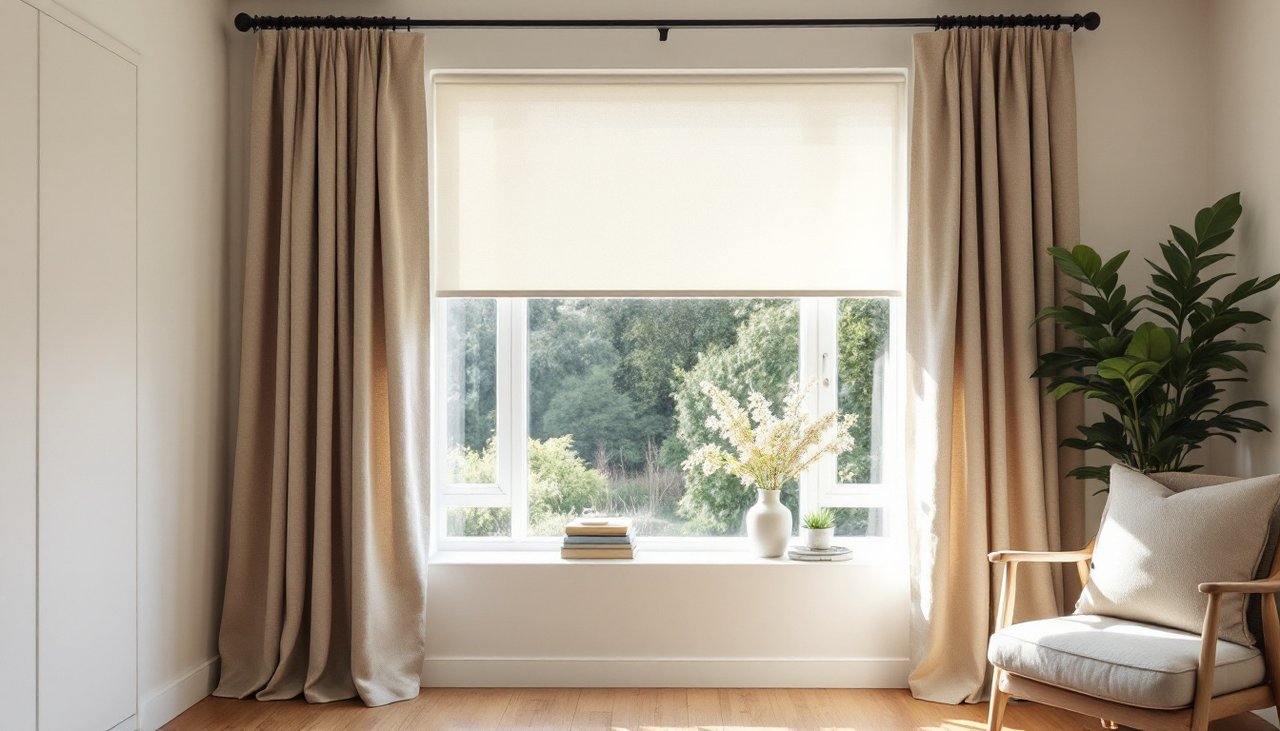
It is just after half past six on a Saturday morning in December, the sun is already pouring through the bedroom window, and you are lying there doing sums in your head. Your partner wants proper floor length curtains. You have been quietly looking at roller blinds because they look simpler and cheaper. Neither of you is sure which one actually suits the room, so the conversation goes round in circles every weekend.
Let's settle it with a clear comparison instead of hunches: which option suits each window, what each one does well, and what moves the price of each. The exact figure for your home comes after a free in home measure, where you can look at both curtains and blinds for your actual windows.
The Short Version: Which Suits Which Window
Blinds suit standard windows, wet rooms and anywhere space is tight; curtains suit wide or tall openings where you want softness and a finished look.
Window by window, that usually works out like this:
- Standard bedroom window: a blockout roller blind, or a lined blockout curtain if you want the softer look.
- Wide lounge window or ranchslider: curtains, where the fabric makes the opening a feature; a vertical blind is the practical alternative.
- Kitchen, bathroom or laundry window: a roller blind, which sits clear of the bench, steam and splashes.
- Home office or television wall: a sunscreen roller blind to cut glare and keep the view.
- Street facing window: something you can close fully at night, either a blockout curtain or a blockout blind.
What Moves the Price of Each
Price follows the same line as fit: on a standard window, blinds usually come in lower, and on wide or tall openings the gap grows, but so does what curtains give you for the money.
The table below shows how the price of each option moves as the window changes. Use it to read a quote, not to predict one.
| Window | Made to measure curtains | Blinds |
|---|---|---|
| Standard bedroom window, about 1.8m wide by 1.5m drop | Needs roughly two to two and a half times the track width in fabric, so usually the higher of the two | One flat width of fabric on a tube, usually the lower cost option |
| Large lounge window, about 2.4m wide by 2.1m drop | Fabric grows with both width and drop, and lining adds a second layer, so the gap widens | Often two rollers side by side or one vertical blind; cost rises with width, but more gently |
| Ranchslider, 3.0m or wider, full drop | The largest amount of fabric in the house, often the biggest single line on a curtain quote | Priced by width; one vertical track is usually the lower cost route |
| Adding a motor | One motorised track per window, added on top of the fabric | One motor per blind, so a wide window split into two rollers needs two motors |
Why the difference? It mostly comes down to fabric. A curtain is made with fullness, usually two to two and a half times the width of the track, so it gathers into soft folds instead of hanging flat. A 2.4 metre window can need five or six metres of fabric width before lining is even added. A roller blind uses one flat width of fabric on a tube. Same window, very different amount of cloth.
Within curtains, a sheer or an unlined curtain has the least material and making in it, while a lined blockout adds a second layer of fabric. Fabric, lining, heading style and the drop of each window move a curtain quote more than anything else, which is why curtain prices spread so widely from entry level to premium.
Blind quotes sit in a narrower band, and the fabric type (blockout, light filtering or sunscreen) is the main thing that moves them. If you are weighing up curtains plus blinds, the total mostly depends on how many windows get both layers.
When you compare two quotes, check that both include the same things: the hardware, the lining if there is one, and the fitting, whether the price is per window or per square metre, and whether GST is included.
Option A: Made to Measure Curtains
Made to measure curtains cost more per window than blinds, so the fair question is what that extra spend buys you. Quite a lot, as it turns out, just not the same things a blind does.
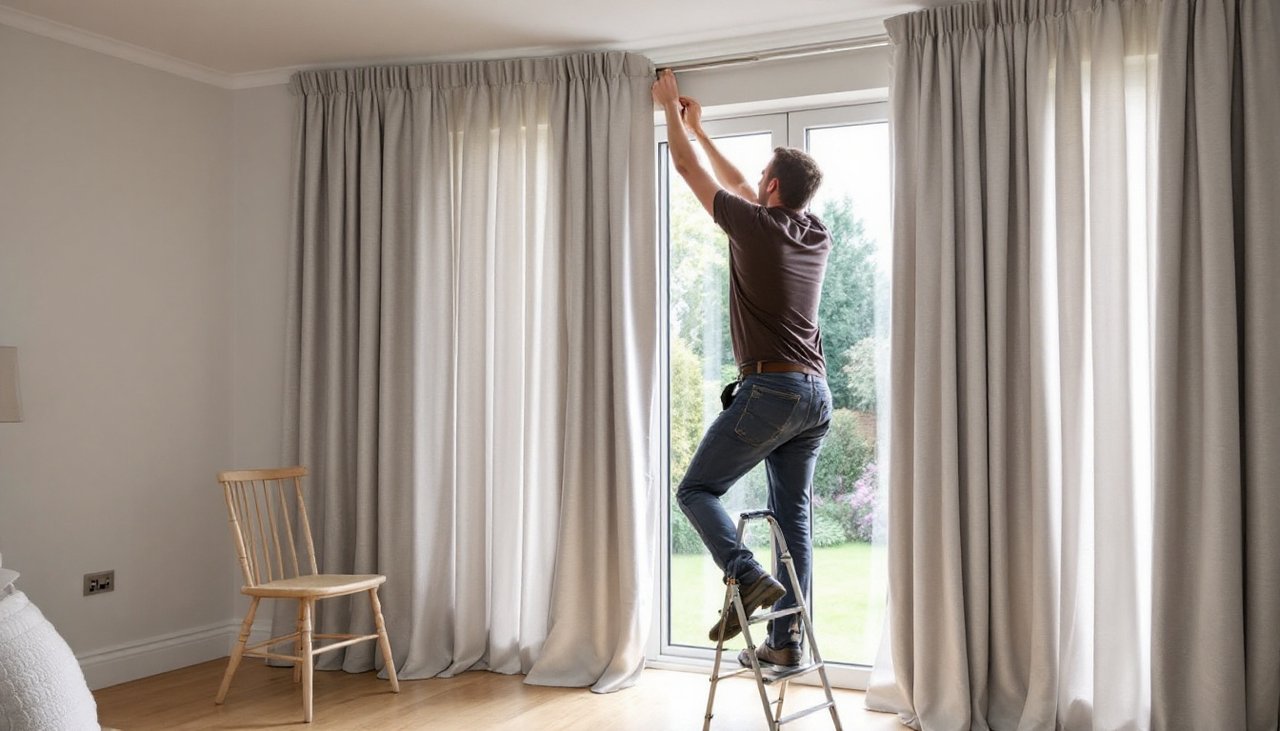
What curtains do well:
- They can make a window look bigger. A track mounted wider and higher than the frame lets the curtain stack clear of the glass, so the whole window is on show when they are open.
- They soften a room. In a lounge with hard floors and high ceilings, fabric folds take the edge off the echo and make the space feel more finished.
- They layer. A sheer curtain by day and a blockout at night, hung together on a double track, gives you two jobs on one window, something a single blind cannot do.
- They offer real fabric choice. Linen look weaves, textured sheers, S fold and other heading styles, and a broad colour range let you style a room rather than just cover the glass.
- They cope with awkward openings. Wide ranchsliders, bay windows and floor to ceiling glass are where curtains look most at home.
Where curtains fall short:
- Higher cost per window, especially on large glass, because of that fullness.
- Stack space. Open curtains gather at the sides, so you need a little wall either side or you lose a slice of the view.
- Hems need looking after. Floor length curtains collect dust and pet hair at the bottom and deserve a proper clean now and then.
Option B: Roller and Vertical Blinds
Blinds win on price for most standard windows, and they are genuinely good at a few jobs curtains struggle with. Our blinds range includes roller blinds in blockout, light filtering and sunscreen fabrics, plus vertical blinds, where a single vertical track can cover a wide sliding door or ranchslider in one go.
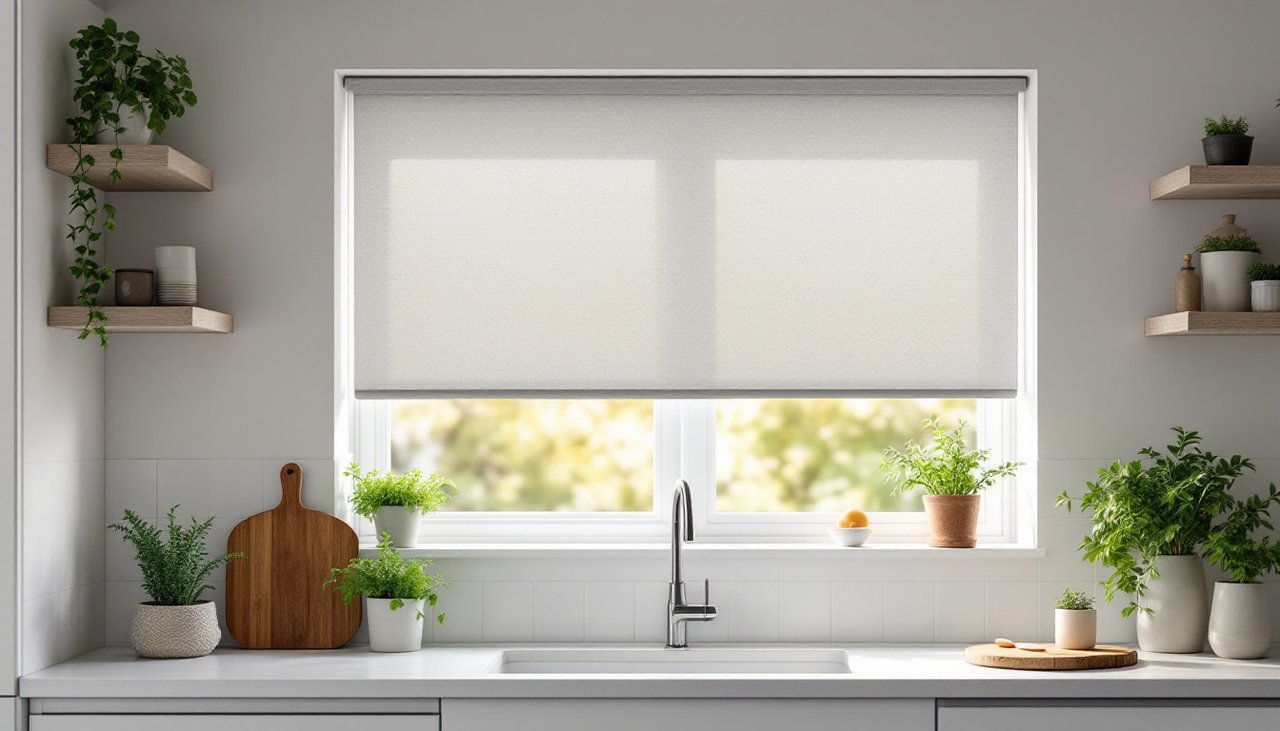
What blinds do well:
- Lower cost on everyday windows. On a typical bedroom or kitchen window a roller blind usually lands under the equivalent curtain.
- They take up almost no space. A roller sits inside the reveal or just above the frame, which suits kitchens, bathrooms, laundries and windows over a bench.
- Darkness for sleep. A blockout fabric takes a bedroom from bright to dark in one pull, which helps with early summer sunrises, shift work and children's daytime naps.
- Daytime privacy and glare control. A sunscreen fabric screens the room from the street in daylight and cuts glare, and you still keep the view out.
- Simple upkeep. Most roller fabrics can be wiped down or gently vacuumed, and there is no hem sitting on the floor.
Where blinds fall short:
- A flatter, more practical look. In a large living room with tall glass, a row of rollers can feel a bit utilitarian.
- Light at the edges. A roller leaves a small gap down each side, so some light can show at the edges. When you compare quotes, ask how light at the edges will be handled on your window.
- One job per blind. A single roller is either sunscreen or blockout. Wanting both means a double roller or a second product.
- Cords need thought in family homes. For anyone installing new window coverings in a home with young children, Product Safety New Zealand recommends choosing curtains or blinds without any exposed cords. Cordless or motorised control removes the issue, and a hand drawn curtain has no cord at all.
Sleep, Privacy and Glare: Where Each Option Wins
Price is only half the decision. The other half is what you need each window to do, and here the two options trade places depending on the room.
Sleep. Both can make a bedroom dark. A lined blockout curtain on a track that runs past the frame wraps the edges of the window, so light has fewer places to sneak in. A blockout roller also darkens the room, and for less money on a standard window, though a little light can still show down each side.
Privacy. This is where people get caught out. A sunscreen roller gives you daytime privacy while keeping the view, but at night, with the lights on inside, many sunscreen weaves become see through from the street. A sheer curtain behaves the same way. For a street facing lounge, the answer is usually something you can close fully at night: a blockout layer, whether that is a curtain or a blind.
Glare. For a television wall or a home office with low afternoon sun, a sunscreen roller is hard to beat on value. It drops straight down, cuts the glare on the screen, and you can still see the garden. Curtains can do this with a sheer, but you are paying for fullness you may not need.
Wet and busy rooms. Kitchens, bathrooms and laundries favour blinds almost every time. There is less fabric near steam and splashes, and nothing hanging near the bench.
Living With Them: Upkeep and Changing Your Mind
Both do their job well when they are measured and fitted properly. The differences show up in how you live with them.
Curtains are the bigger styling decision: change them and the room feels different. Blinds tend to be more neutral, so they happily outlast a change of furniture or wall colour.
Cleaning is simpler with blinds: a wipe or a vacuum on a regular basis. Curtains need an occasional proper clean, and lined or blockout curtains are usually a job for a specialist cleaner rather than the home washing machine.
If you are renovating, book the measure once the window frames and any new architraves are finished, because curtains and blinds are both made to the measurements of the finished opening. Lead times depend on the products and fabrics you choose, and we confirm them with you at the measure.
Using Both: When Curtains and Blinds Share a Window
You do not have to pick one. Plenty of homes put a blind in the reveal and a curtain on a track in front of it.
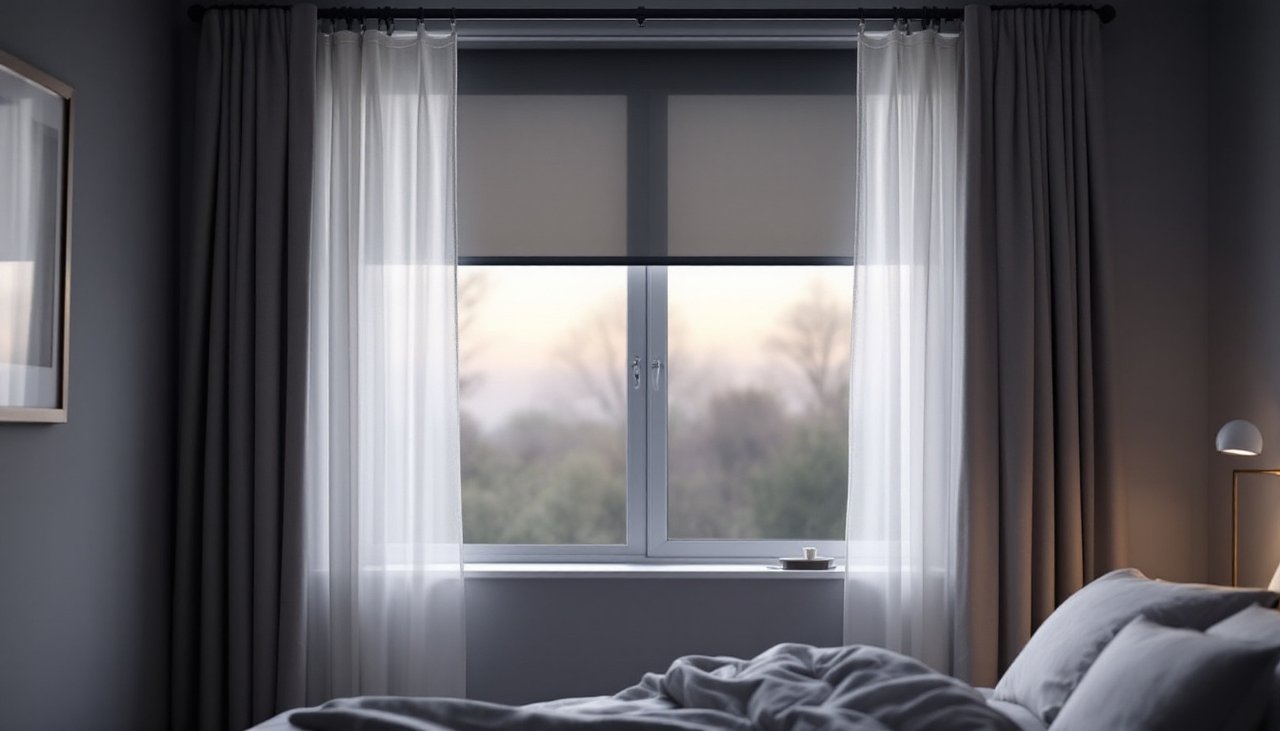
The most common version is a blockout roller for darkness plus a sheer curtain for softness. One window gives you two looks: darkness at night and a soft, finished sheer by day. Compared with a single lined blockout curtain, the pair is two products on one window, so it usually costs more; it earns that extra when you want the sheer look during the day. If you only need the room dark at night and rarely draw a sheer, the single lined blockout curtain is the simpler and usually cheaper choice.
One practical note: a pairing needs depth. The blind has to sit inside the reveal or close to the glass, with enough room in front for the curtain track to run clear of it. That is checked window by window at the measure, so mention early on if you are thinking about both.
Which One Suits You, Room by Room?
Choose curtains if:
- The window is wide, tall or floor to ceiling and you want it to feel like a feature.
- The room has hard surfaces and feels a little bare or echoey.
- You want both a sheer and a blockout on the same window.
- You are planning to stay put and want the room to feel finished.
Choose blinds if:
- The window is a standard size and budget matters most.
- The room is a kitchen, bathroom, laundry or anywhere with a bench under the window.
- Glare on a screen is the main problem.
- You want something neutral that outlasts a repaint.
Choose both if you want blockout darkness at night and softness by day on the same window.
For a typical three bedroom New Zealand home, a sensible split often looks like this: curtains in the lounge and main bedroom where the look matters most, blockout rollers in the other bedrooms, and sunscreen rollers in the kitchen and office. That keeps the curtain spend on the windows people actually sit and sleep beside.
If you are still torn on a room, fabric usually decides it, and at the in home measure we can talk through the fabric choices for curtains and blinds together, in the room they are meant for.
The easiest way to settle it is to look at both options on your actual windows. Book a free in home measure in Auckland through the quote form on this page. We will measure your windows and talk through curtains and blinds for each room, so you can decide with your own measurements and a quote in front of you instead of guesswork.
Curtains vs Blinds: Common Questions
Are blinds always cheaper than curtains?
Not always, but usually on standard windows, because a roller blind has far less fabric and making in it than a curtain with fullness and lining. The gap is widest on big openings such as the lounge and the ranchslider. It can narrow when a wide window is split into several motorised blinds, or when a double roller is compared with a simple unlined curtain.
What decides the total cost of curtains and blinds for a whole home?
It depends on how many windows you have and which product goes on each one. For curtains, the fabric, lining, heading and the size of each window drive the total. A mix then moves the total: blinds in place of curtains on standard windows, such as the spare bedrooms, kitchen and office, generally bring it down, while a blind and a curtain on the same window add to it.
How does an in home measure and quote work?
We visit your home, measure each window, and talk through fabrics, headings and controls for each room, so curtains and blinds can be considered for the same windows. Your quote is then worked out from those measurements, and there is no charge for the measure or the quote. You can take the time you need to compare both options before you decide.
How does adding a motor change a curtains or blinds quote?
A motor is priced on top of the curtain or blind itself, so it raises the quote on either option. Depending on the type of motor, it may also need a power source near the window. Many households motorise only the windows that are hard to reach or used every day, such as high glass or a wide ranchslider, and keep manual control everywhere else to hold the total down.
I am renting or staying short term. Should I choose curtains or blinds?
For most rentals and short stays, blinds are the more sensible choice, and the reason is spend rather than quality. Curtains and blinds are both made to measure for your windows, but on a standard window a roller blind costs less and fits on small brackets inside the reveal or just above the frame, so you invest less in a home you may not stay in. Start with blockout blinds in the bedrooms, where darkness and privacy matter most. If you rent, talk to your landlord before anything is ordered, because tracks and brackets are fixed to the wall or frame.