Blackout vs Blockout Curtains: Is There a Difference in New Zealand?
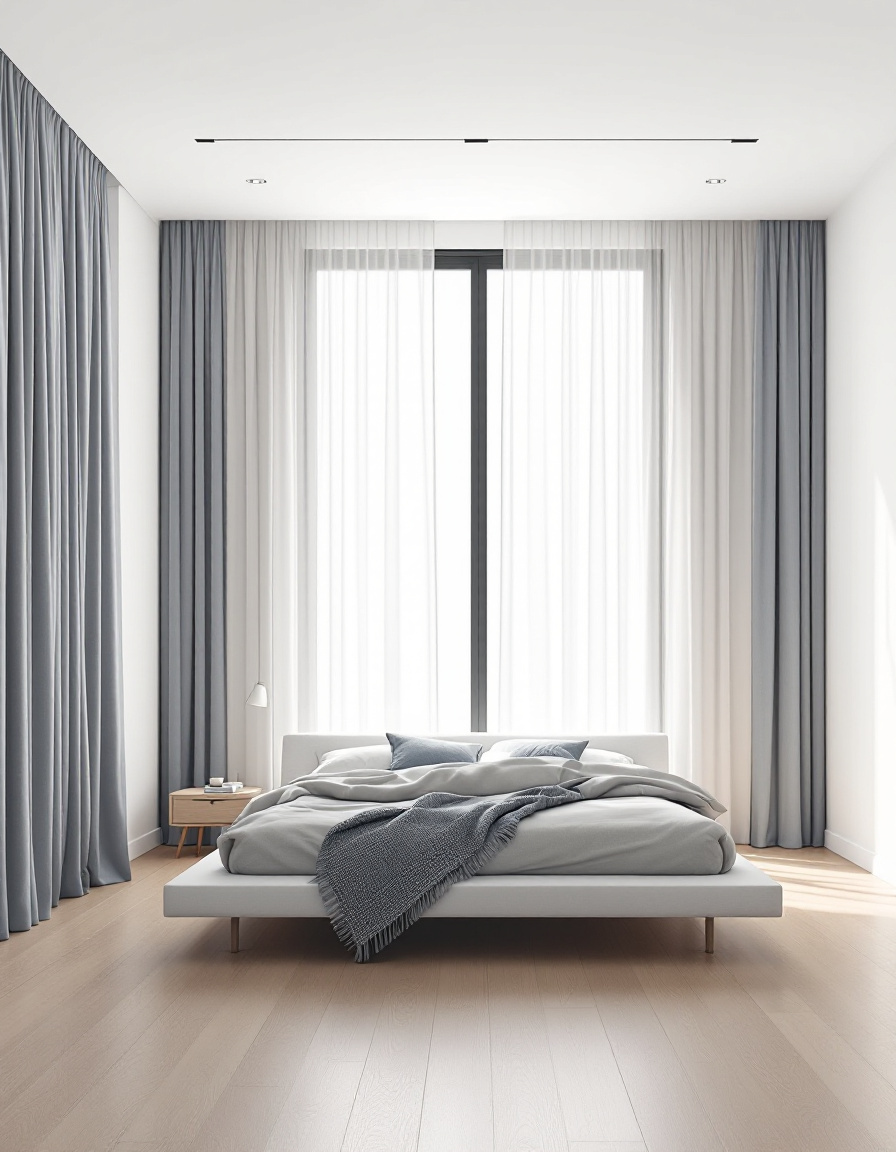
If you have shopped for curtains that keep a room dark, you have probably seen both spellings: blackout and blockout. It is easy to assume they are two different products with two different jobs. They are not. Blackout and blockout are two words for the same thing, curtains made to block light, and the choice of spelling tells you nothing about how well a curtain actually works.
This guide clears up the wording for New Zealand shoppers, then covers the part that does matter: what really decides how much light a curtain blocks, and how to choose the right one for your room.
The quick answer
Are they different? No. Blackout and blockout curtains are the same category of product. Both mean curtains designed to block light rather than filter it.
Which word is used in NZ? Blockout is the term you will see most often from New Zealand curtain makers and retailers. Blackout is the more international spelling, common overseas and in a lot of online searches.
What should you compare instead? The fabric, the lining and the fit. Those decide how dark the room actually gets, not the word on the label.
Blackout or blockout: which is correct in New Zealand?
Both are correct, they just come from different places. Blockout is the word the curtain trade uses across New Zealand and Australia, so it is the term you will find on most local product pages, including our own blockout curtains. Blackout is the spelling used widely overseas, so it turns up constantly in online searches, on imported products and in international home articles.
Because so many people search blackout curtains NZ while local makers list blockout curtains NZ, the two words end up describing the exact same shelf. If you search one and land on the other, you have not made a mistake, you are looking at the same product.
So is there any difference between blackout and blockout curtains?
No, not as products. There is no standard that says a blackout curtain blocks more light than a blockout curtain, or the other way around. Any real difference in performance comes from how a particular curtain is made, not from which of the two words the seller happened to use.
That is the trap worth avoiding. Two curtains can both be sold as blackout, or both as blockout, and still perform quite differently because one has a denser fabric, a better lining, or a more careful fit. So once you know the words mean the same thing, the useful question becomes how a specific curtain is built.
| Blackout curtains | Blockout curtains | |
|---|---|---|
| What it means | Curtains made to block light | Curtains made to block light |
| How much light it blocks | Depends on fabric, lining and fit | Depends on fabric, lining and fit |
| Where the word is used | International spelling, common online | The usual term in NZ and Australia |
| The actual product | The same | The same |
What actually decides how much light a curtain blocks
Three things do the real work, whichever word is on the label.
The fabric
A light-blocking curtain uses a tightly woven or coated fabric so that light cannot pass straight through the cloth. A heavier, denser weave blocks more than a thin one. This is the single biggest factor in how dark the room gets.
The lining
Many curtains reach full light blocking through the lining rather than the face fabric alone. A blockout lining sits behind your chosen fabric and stops the light, which means you can have a colour or texture you love on show and still get a dark room behind it.
The fit
Even the best fabric leaks light if the curtain is too narrow or hung too high. Proper fullness, usually two to two and a half times the track width, keeps the curtain dense across the window, and a curtain that runs wider than the glass and sits close to the wall stops light sneaking around the edges.
The three ways a curtain blocks light
Not every light-blocking curtain works the same way, and knowing the three common approaches helps you compare like with like rather than trusting the label.
- Tightly woven fabric: a dense weave, sometimes called a triple-weave, that stops most light on its own while keeping a soft, natural fabric feel.
- Coated or foam-backed fabric: a fabric with a light-blocking layer applied to the back. It blocks more light than weave alone, though it feels a little firmer and drapes with more weight.
- Blockout lining behind a decorative fabric: your chosen face fabric on show, with a separate blockout layer behind it doing the light blocking. This is the most flexible route, because you are not limited to fabrics that happen to block light on their own.
Which one suits you comes down to the look you are after and how dark the room needs to be. The easiest way to tell them apart is to compare samples side by side at a measure, where you can see the drape and hold each fabric up to the light.
Do blockout curtains block 100% of the light?
Here is the honest part. The fabric can block light completely, but a standard curtain still leaves small gaps where light gets in: a thin line down each side, a little over the top, and a sliver along the floor. So a room with blockout curtains gets very dark, but rarely pitch black on its own.
If you need the room as dark as possible, for a shift worker or a baby's room, the fix is in the fit rather than the fabric. Running the curtains wider, overlapping them in the centre, adding a pelmet or a return at the sides, or pairing them with a blockout blind behind, all close those gaps. It is worth mentioning at a measure so the setup is planned for the darkness you actually want.
Why blockout curtains suit New Zealand homes
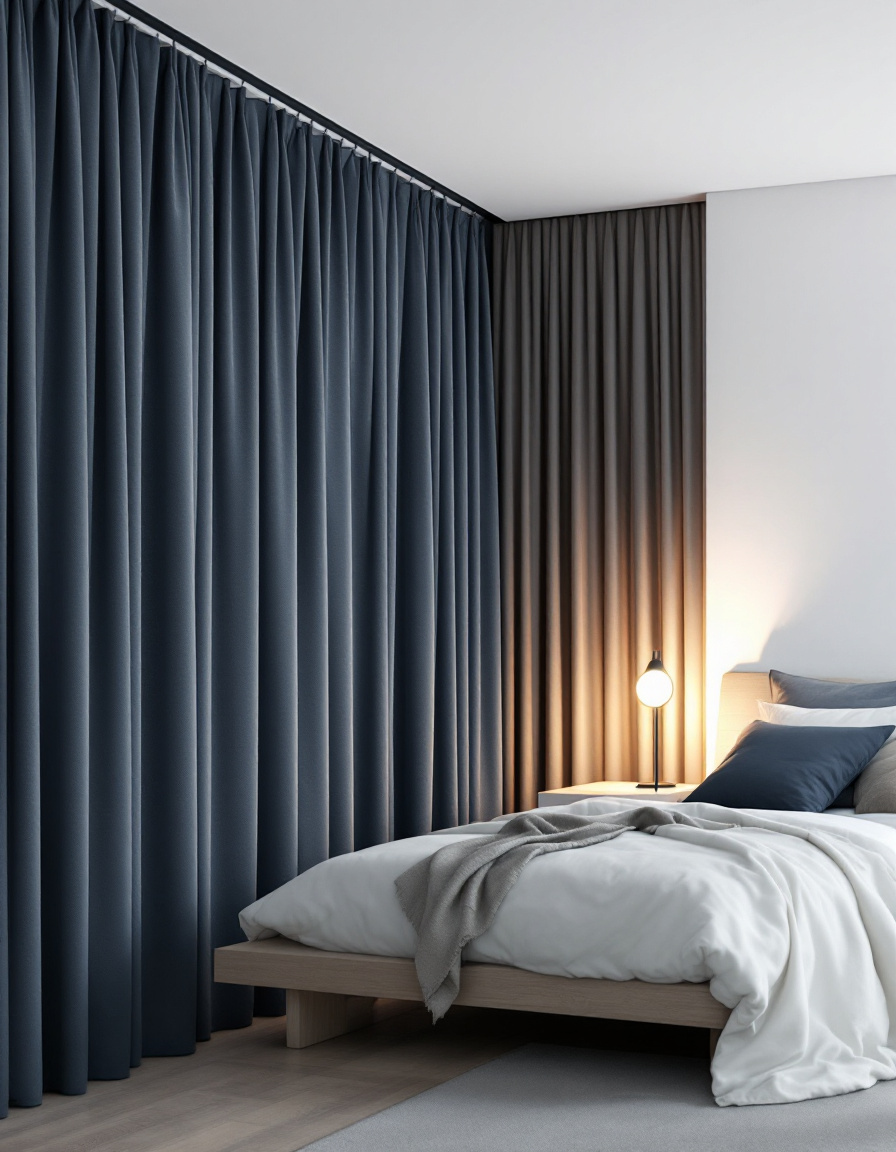
New Zealand gets long, bright summer evenings and early sunrises, so bedrooms can be lit up well before you want to be awake. Blockout curtains give you control over that: a dark room for sleeping in, whether the sun is up at 6am in January or the street light is on outside your window all night.
They also help with the everyday things a bright room makes harder: getting babies and young children to settle, sleeping after a night shift, and cutting glare on a television or screen during the day. For a lot of NZ households the bedroom is the first room they want blockout curtains in, then the media room or nursery next.
Rooms where blockout curtains work best
- Bedrooms: the main reason people buy blockout curtains, for darkness and better sleep through early light.
- Nurseries and children's rooms: to help daytime naps and early bedtimes.
- Media rooms: to cut glare and keep the picture clear.
- Street-facing rooms: for privacy and to block outside lighting at night.
In living areas where you still want daylight, many people pair a blockout curtain with a sheer on the same window, so the sheer handles the day and the blockout curtain closes the room off when needed.
Looking after blockout curtains
Blockout curtains are low effort to keep looking their best. A gentle regular vacuum with a brush head lifts dust before it works into the fabric, which matters most for the heavier weaves and coated backings used in light-blocking curtains. Coated blockout fabrics in particular do not like a hot machine wash, because a hot wash can damage the backing that does the light blocking, so professional cleaning or a careful cool freshen is the safer route. Looked after this way, a well-made blockout curtain holds its colour and its darkness for years rather than fading or thinning early.
Frequently asked questions
Is there a difference between blackout and blockout curtains?
No. They are two spellings for the same product, curtains made to block light. Blockout is the common New Zealand term and blackout is the more international one. Compare the fabric, lining and fit rather than the word.
Do blockout curtains make a room completely dark?
The fabric blocks light fully, but small gaps at the sides, top and bottom let a little in. For a very dark room, the curtains can be run wider, overlapped, given a pelmet, or paired with a blockout blind to close those gaps.
What is the difference between blockout curtains and blockout blinds?
Both block light, but a curtain is soft fabric on a track, while a blind is a flat panel. A curtain gives a softer look and covers more of the wall, which usually means fewer light gaps. Some people use both together for the darkest result.
Can I get blockout curtains in a colour I like?
Yes. Because the light blocking often comes from the lining, you can choose a face fabric and colour to suit the room and still get a dark space behind it. Made-to-measure gives you the full range to pick from.
Are blockout curtains a good choice for a baby's room?
They are one of the most popular choices for nurseries, because a darker room helps babies settle for daytime naps and sleep past an early sunrise. For the darkest result, pair the curtains with a snug fit that runs wider than the window, or add a blockout blind behind, so the edges are covered too.
Next step
Blackout or blockout, the word is the same product. What decides your result is the fabric, the lining and how the curtains are fitted to your window. To see fabrics and plan a dark room properly, browse our blockout curtains range or the full curtains collection, then book a free measure and quote anywhere in our New Zealand service area.